30 Sweater Nails Art Ideas Based on Actual Knit Stitches
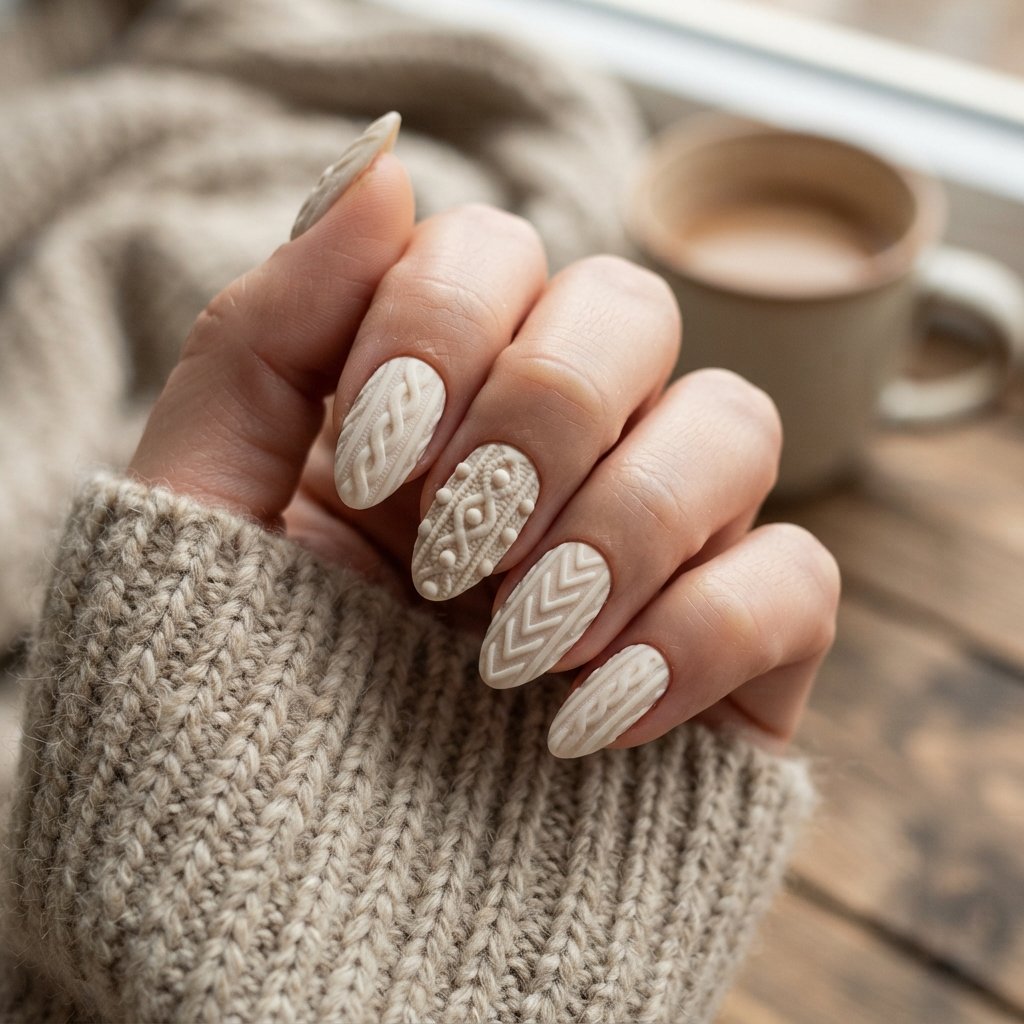
Sweater nails art takes the comfort of knitwear and turns it into something you can wear on your fingertips. It is not just about picking a cozy color anymore — the real appeal comes from recreating actual knitting stitches, weaves, and textures on the nail itself, down to the raised ridges and tiny gaps a real sweater would have.
What makes this trend stand out from typical winter nail looks is the level of detail involved. A cable knit pattern is not the same as a waffle knit, and a Fair Isle design has nothing in common with a honeycomb weave. Below are thirty distinct takes on sweater nails art, each pulled from a real knitting technique, so you can pick one that actually matches the sweater sitting in your closet.
Best Sweater Nails Art Styles to Try This Season
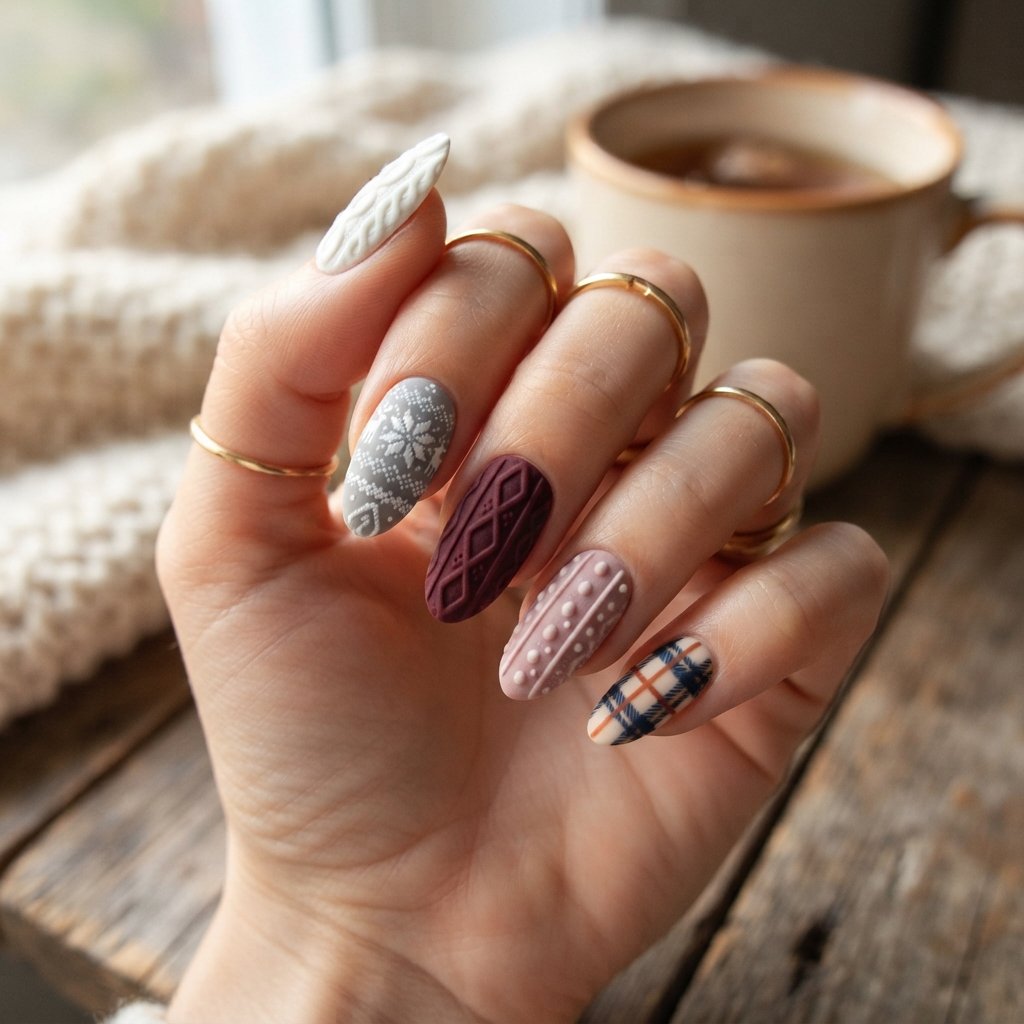
Most nail trends borrow a color palette and call it a theme. Sweater nails art is different because it borrows structure — the actual pattern logic knitters use — and translates it onto a much smaller, curved surface using gel or acrylic.
That translation is where things get interesting. Some of these styles rely on raised 3D texture that you can genuinely feel with your fingertip, while others fake the texture using shading and fine linework alone. Both approaches show up below, so pick based on how much time you have and how bold you want the final result to look.
Cable Knit Nail Art
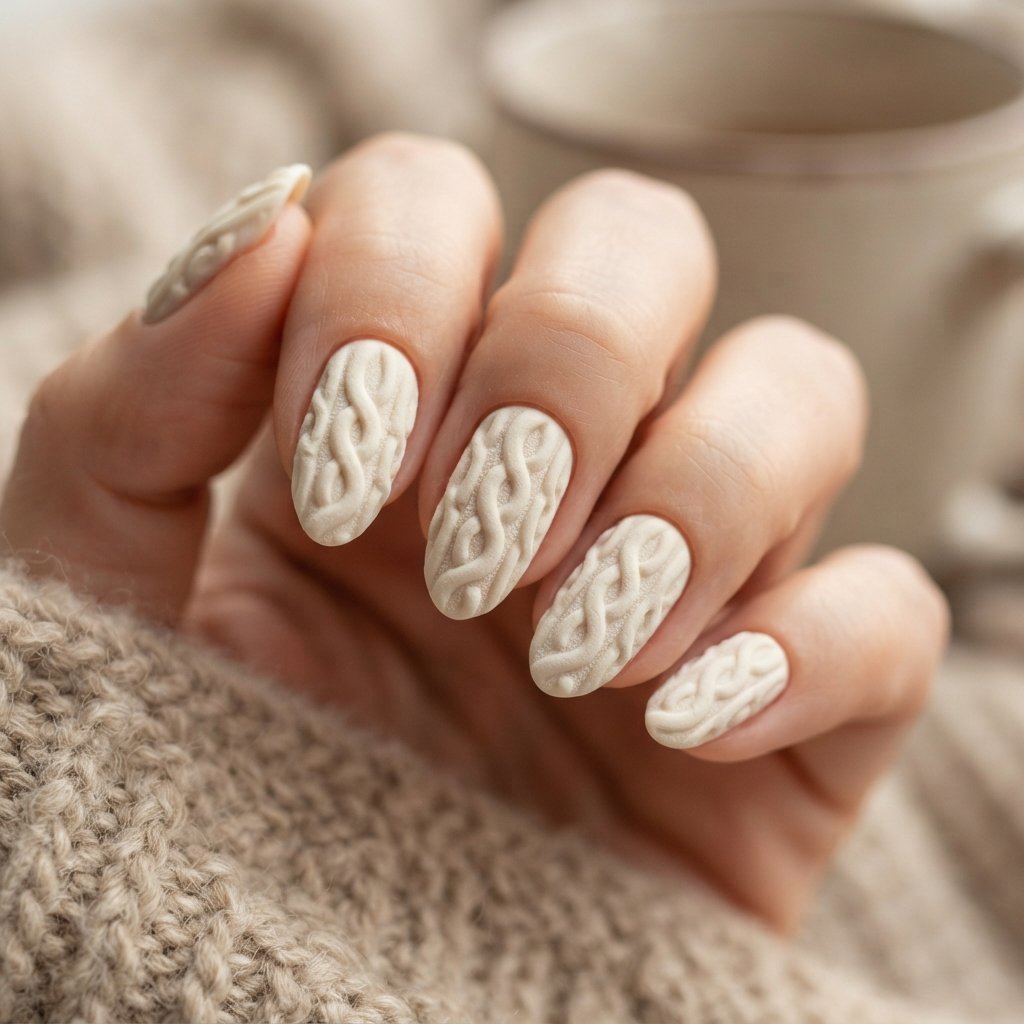
This is the pattern most people picture first when they hear “sweater nails,” and for good reason — the twisted rope-like braid down the center of a chunky Aran sweater is instantly recognizable. Recreating it means painting two curved lines that cross over each other repeatedly, usually in a slightly raised gel to give it dimension.
Cream and oatmeal shades sell this look the best. Darker colors tend to hide the crossing detail unless you’re working under strong studio lighting.
Click More: 30 Sweater Nails Ideas Worth Trying This Winter
Hand Painted Yarn Nail Art
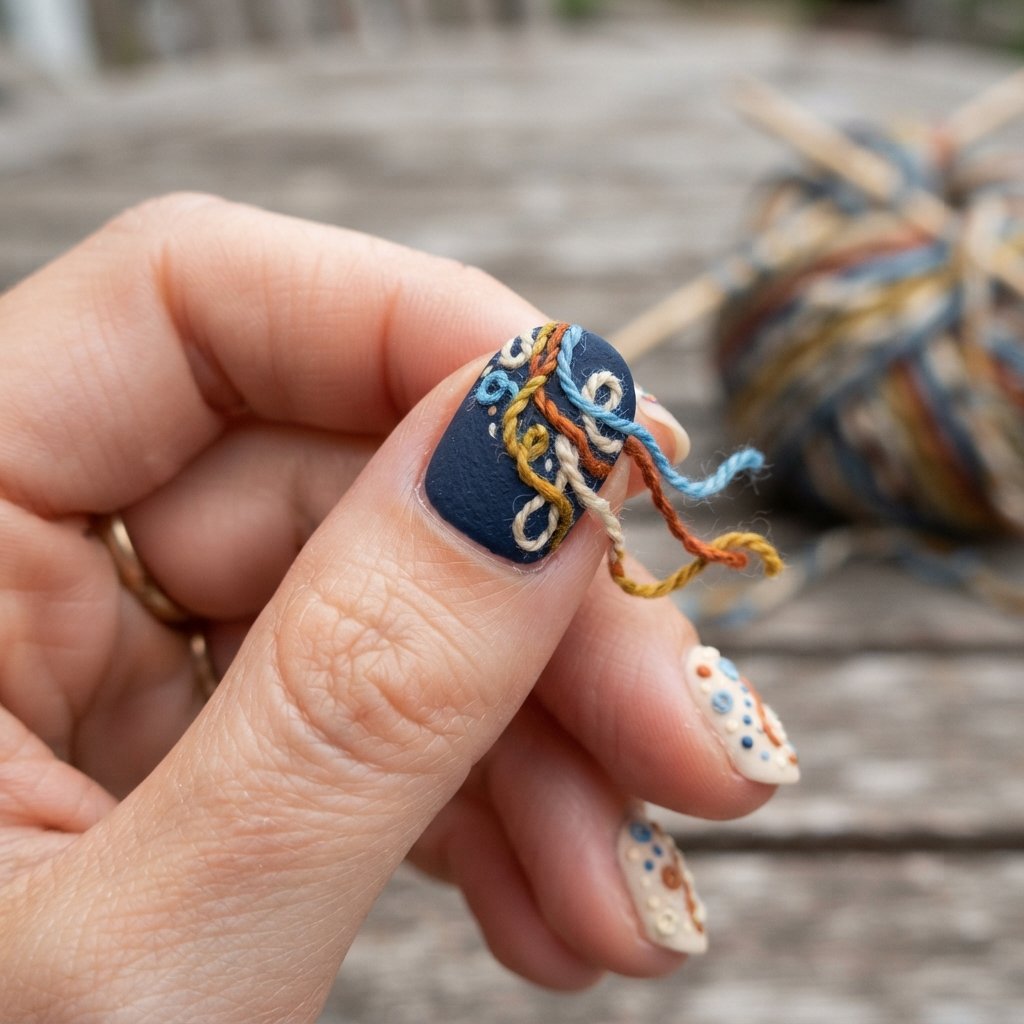
Rather than a formal stitch pattern, this style paints loose, curling yarn strands across the nail bed, sometimes trailing off the tip like a loose thread. It looks less structured than cable knit and more like a close-up of unraveled wool.
A single wandering yarn line on an accent nail, done in a contrasting color, reads as intentional rather than messy — which is the balance this design needs to work.
3D Textured Sweater Nail Art
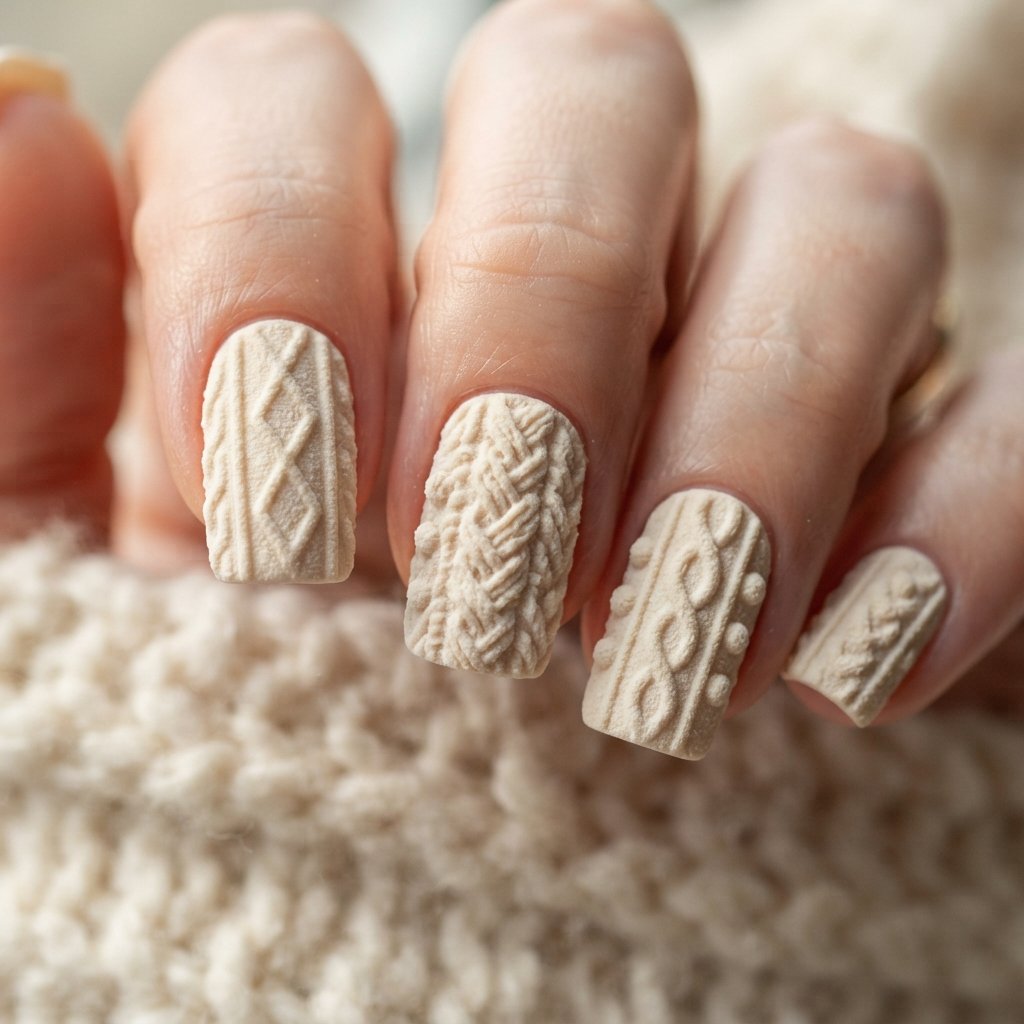
Here the sweater look is built physically rather than painted. A textured gel or specialty acrylic powder is applied and shaped while wet to create genuine ridges and bumps you can feel.
It takes longer at the salon chair, no question. But it’s the only style on this list that actually mimics the tactile experience of touching a real knit, which is honestly the whole point for some people.
Fair Isle Pattern Nail Art
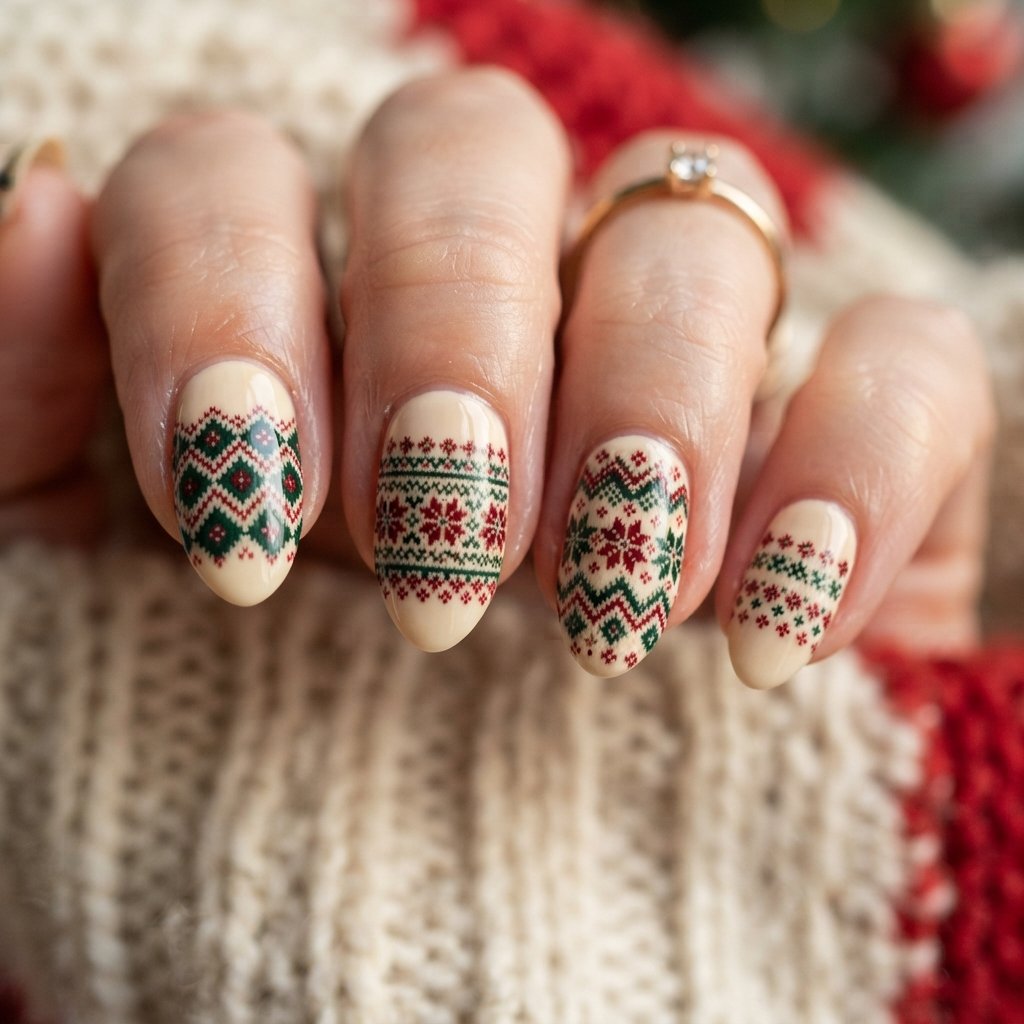
Named after the tiny Scottish island where the technique originated, Fair Isle uses small repeating geometric motifs — often diamonds or crosses — in two or three colors across a single row. On nails, this usually means one thin decorative band near the tip rather than covering the full surface.
Red, cream, and forest green is the traditional combination, though a lot of nail artists now swap in navy or mustard for something less obviously “Christmas.”
Chunky Rib Knit Nail Art
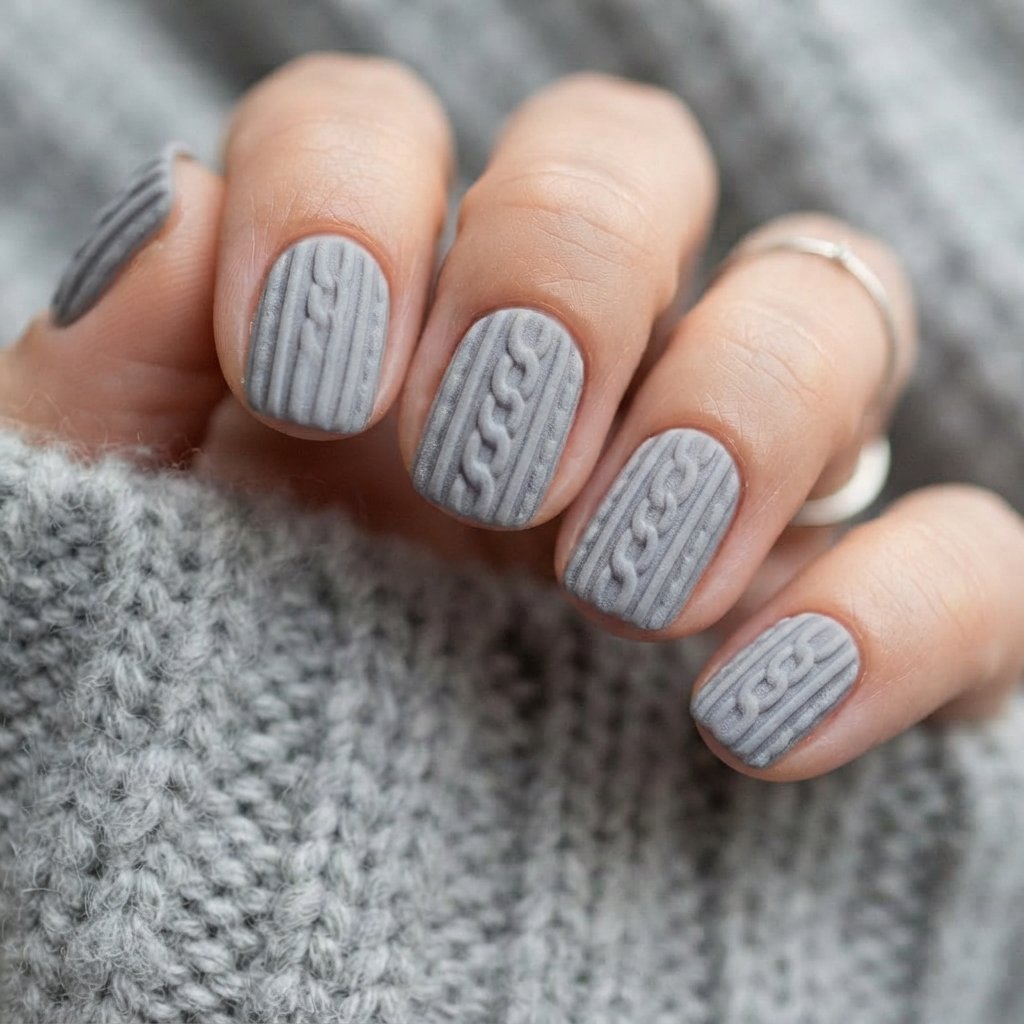
Ribbing is what gives sweater cuffs and hems their stretch, and visually it’s just alternating raised and recessed vertical columns. On nails this translates into thick, closely spaced vertical lines — wider than the delicate knitted line designs you might see elsewhere.
Because the lines run the full length of the nail, this style actually elongates shorter nail beds a little, which is a nice side benefit.
Waffle Knit Nail Art
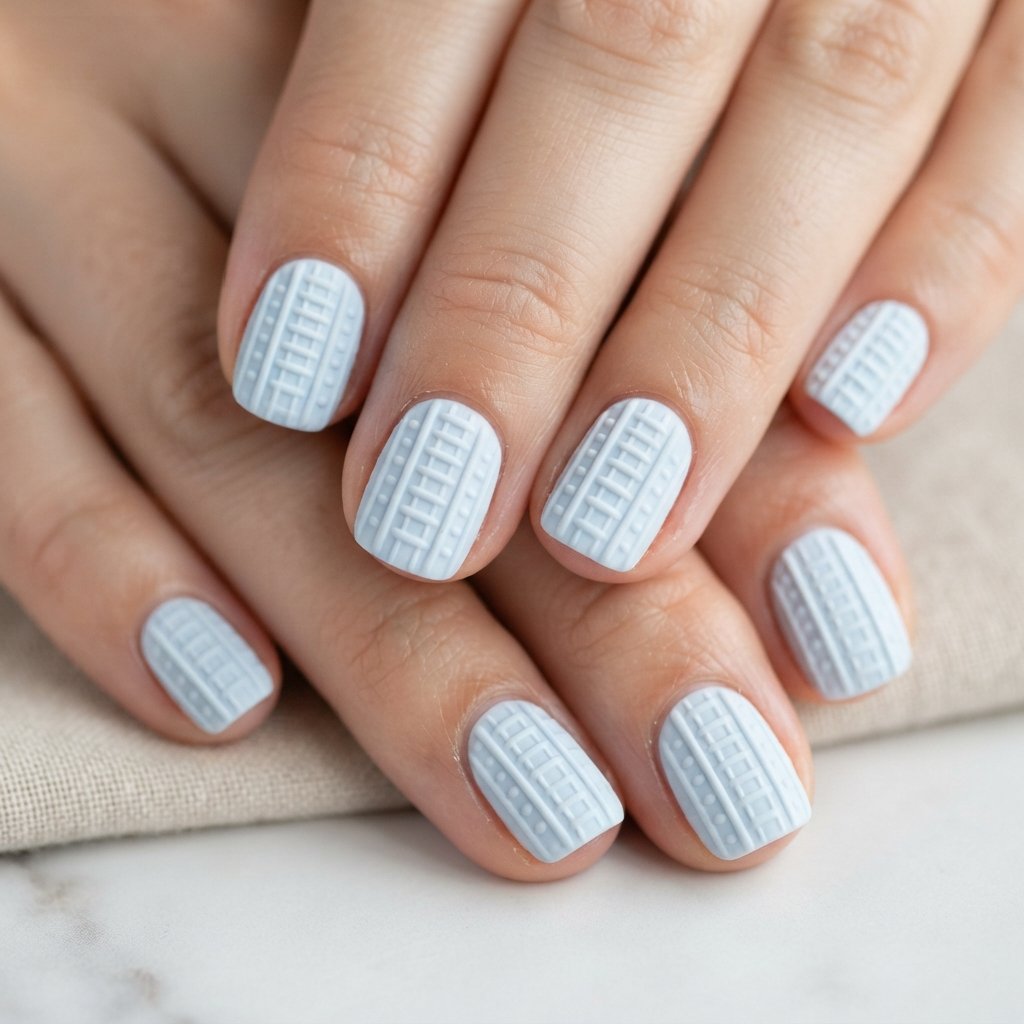
Waffle knit fabric has that distinctive grid of small squares, each one slightly puffed at the edges. Painting this requires a fine brush and a steady hand, since the grid needs to stay even across a curved surface — uneven grid lines are the fastest way to make this pattern look sloppy instead of deliberate.
Soft grey or pale blue works surprisingly well here, since it lets the shadow lines of the grid do most of the visual work.
Aran Sweater Nail Art
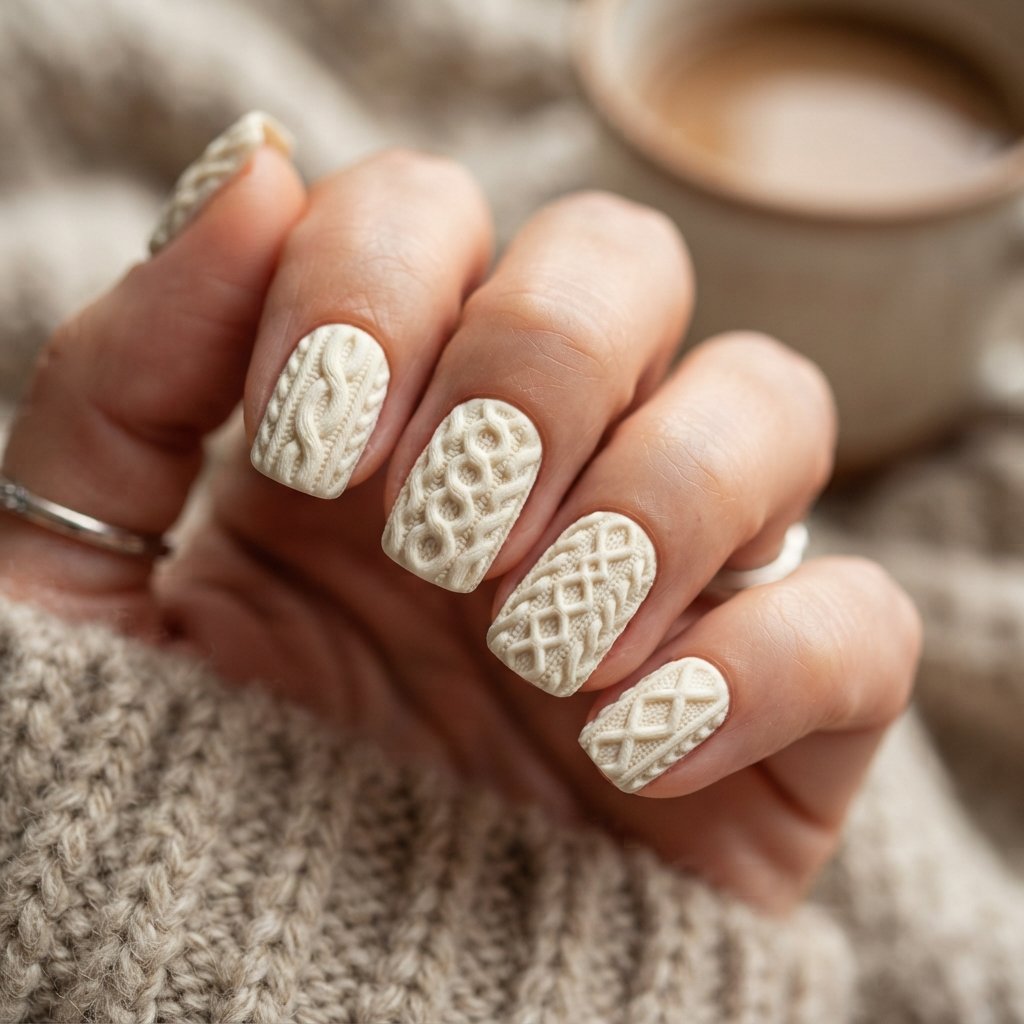
Aran knitting is basically cable knit’s more elaborate cousin, layering multiple twisted patterns side by side across a single garment. Bringing this fully onto a nail means picking just one or two of those motifs rather than trying to cram the whole sweater’s complexity onto ten small canvases.
Cream is almost non-negotiable for this one. Traditional Aran sweaters are cream for a reason, and any other base color tends to fight with the pattern rather than support it.
Pointelle Lace Knit Nail Art
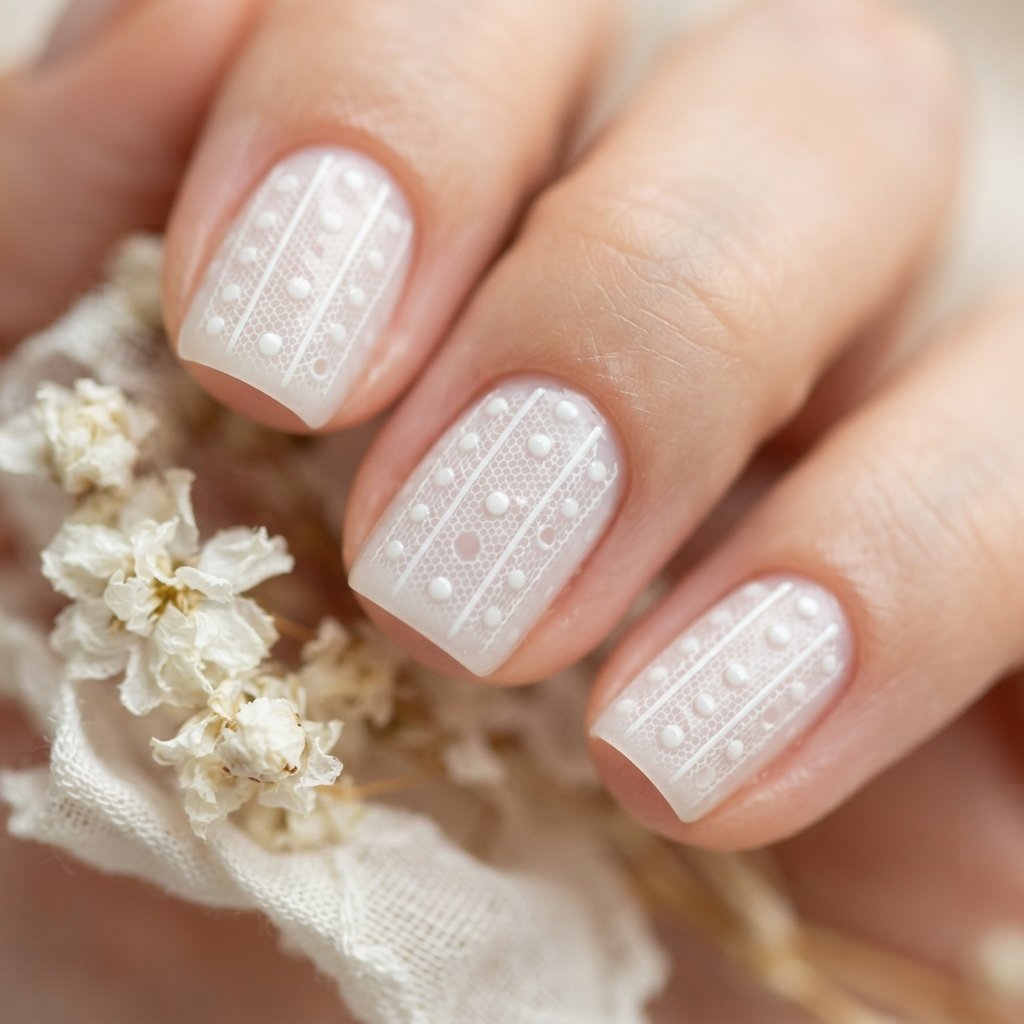
Pointelle uses small, deliberate holes woven into the knit to create a lace-like openness — think of it as the airy opposite of a chunky cable pattern. On nails, this becomes tiny painted dots or negative space circles arranged in a loose grid.
It suits people who want the sweater theme without the bulk, and it photographs unexpectedly well against a sheer or milky base.
Basket Weave Nail Art
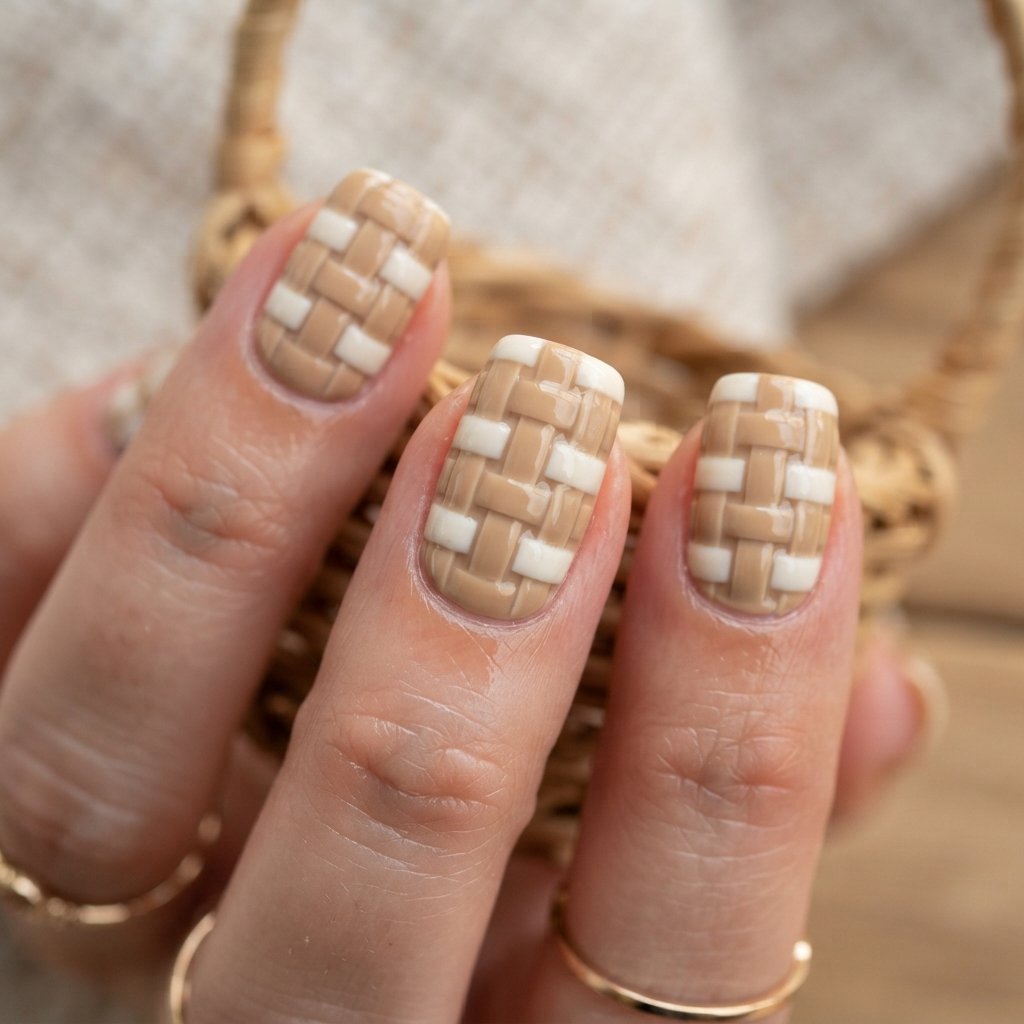
Imagine a woven picnic basket flattened onto a nail — vertical and horizontal bands crossing over and under each other in an alternating pattern. It’s more geometric than most of the patterns here, which makes it easier to get symmetrical even for beginners.
Two-tone versions, like tan crossed with white, sell the “woven” illusion far better than a single flat color does.
Nordic Snowflake Knit Nail Art
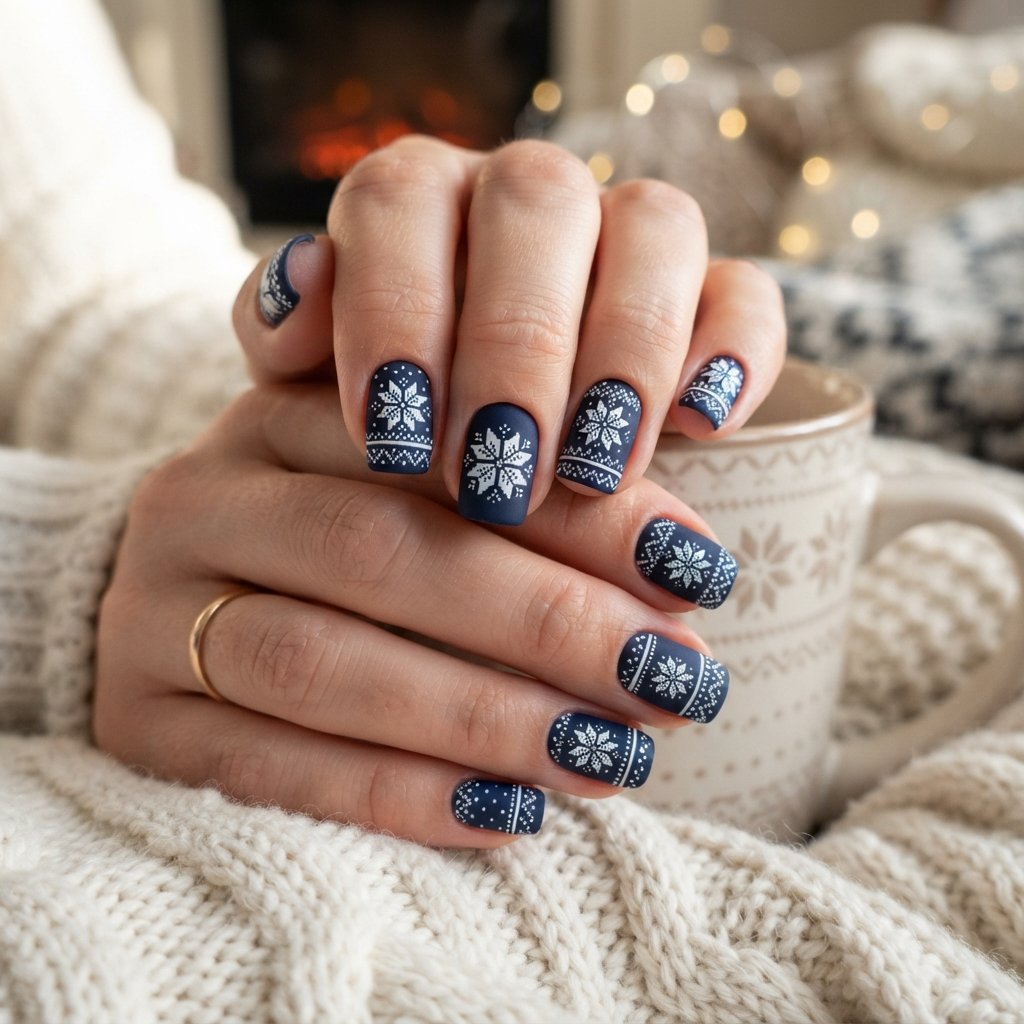
This one leans into the literal winter imagery — six-pointed snowflakes painted in white against a deep navy or burgundy base, spaced out like they’d appear across a Nordic sweater’s yoke. It’s simpler to execute than most patterns on this list, which is exactly why it’s popular for people doing their own nails at home.
One detailed snowflake on the ring finger, with the rest of the nails left a solid color, avoids the design looking cluttered.
Herringbone Weave Nail Art
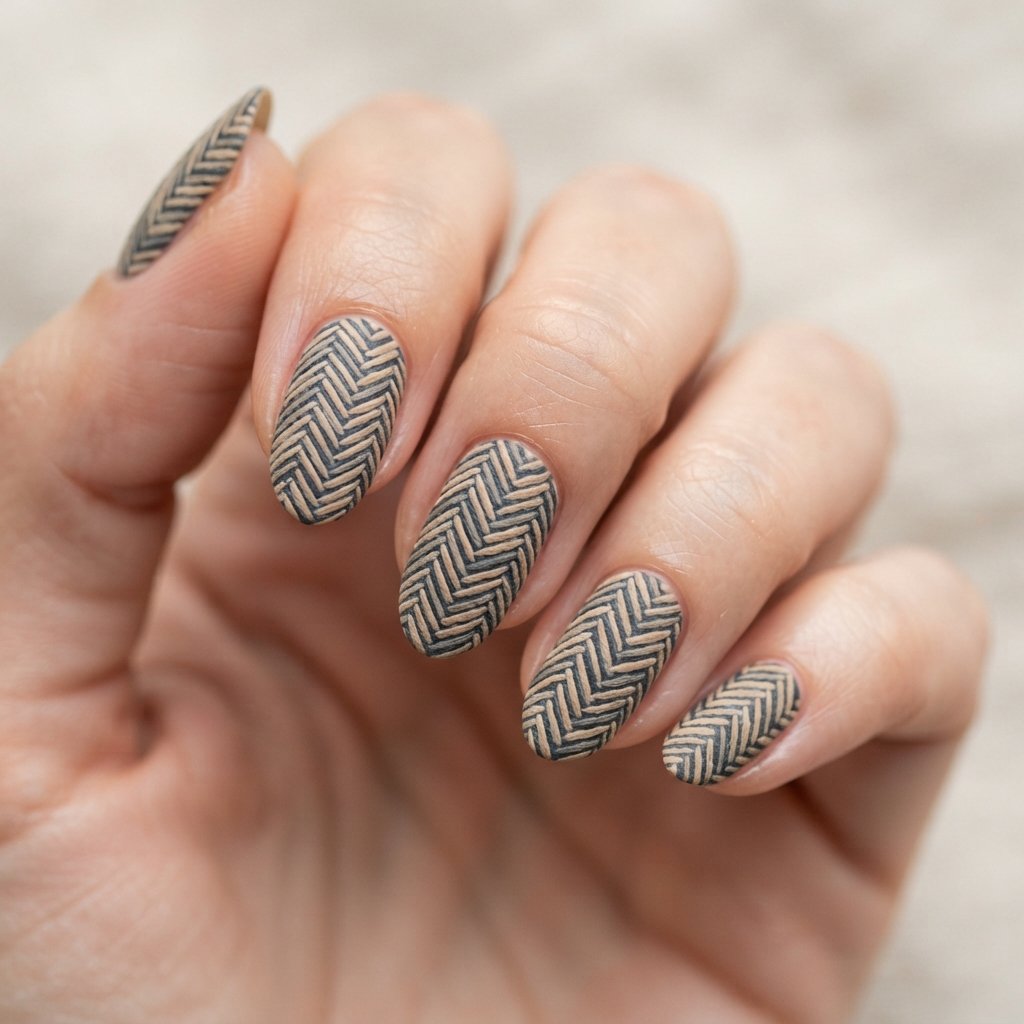
Herringbone gets its name from the way it visually resembles fish bones — a zigzag of short diagonal strokes stacked in offset rows. It’s a woven pattern rather than a knit one, technically, but it shows up on enough winter sweaters that it belongs firmly in this category.
Muted tones like camel and charcoal keep the zigzag from feeling too busy on a small nail surface.
Houndstooth Knit Nail Art
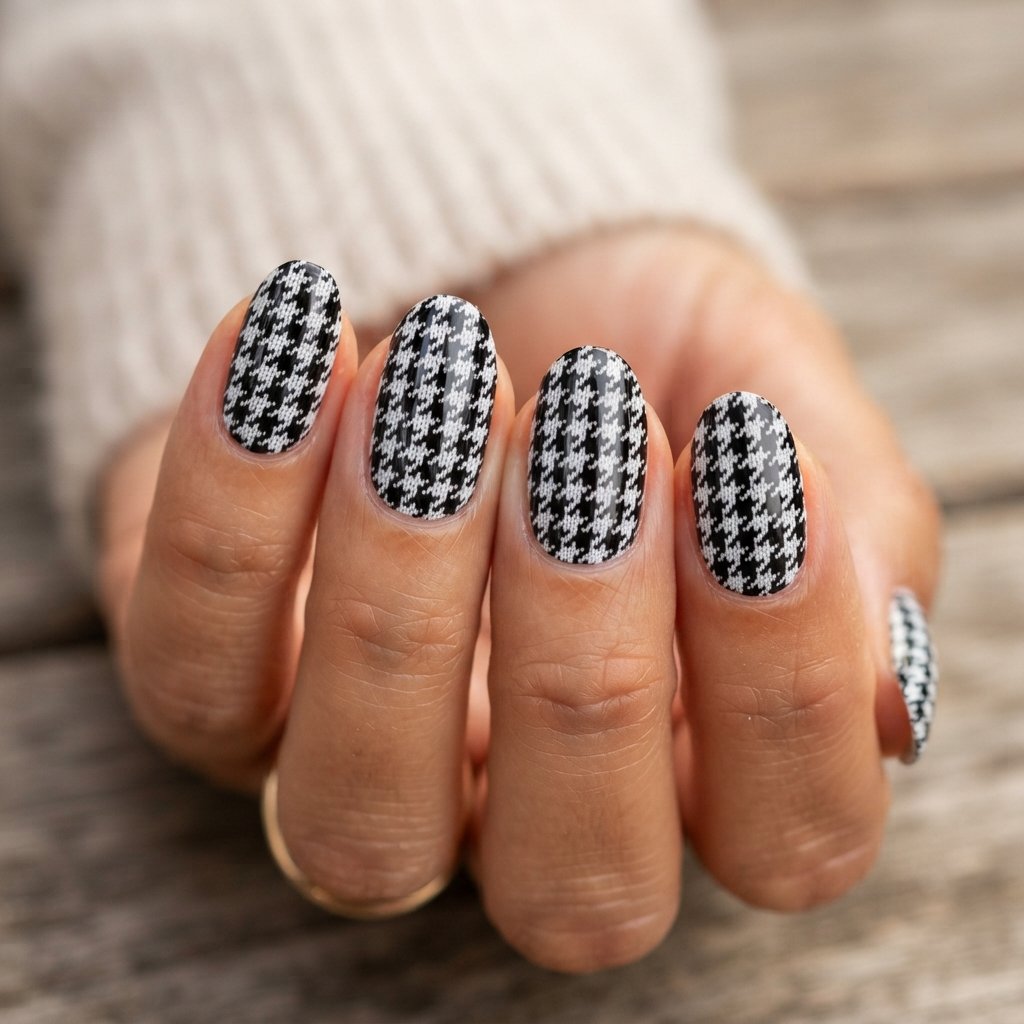
Houndstooth’s broken checkered pattern is instantly recognizable from tweed coats and blazers, and it translates onto nails as small four-pointed shapes alternating between two colors. Black and white is the classic combination, though burgundy and cream gives a softer, less severe version.
This pattern demands precision more than most others here — even slightly uneven shapes throw off the whole illusion.
Chenille Texture Nail Art
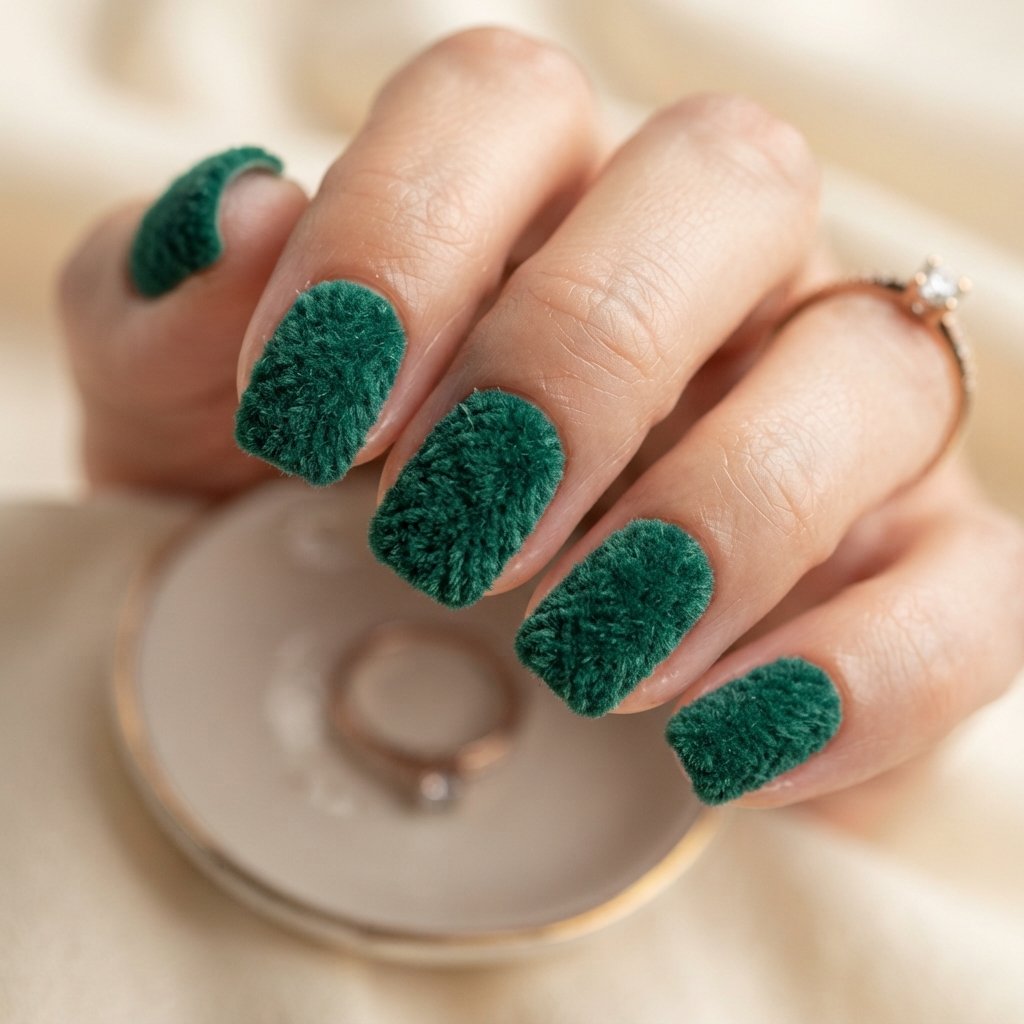
Chenille yarn has a soft, almost velvety fuzz to it, and recreating that on nails usually involves a flocking powder pressed into wet polish. The result doesn’t look painted at all — it genuinely looks soft, which is the entire appeal.
Deep jewel tones like emerald or plum make the fuzzy texture pop more than pale shades do.
Braided Cable Nail Art
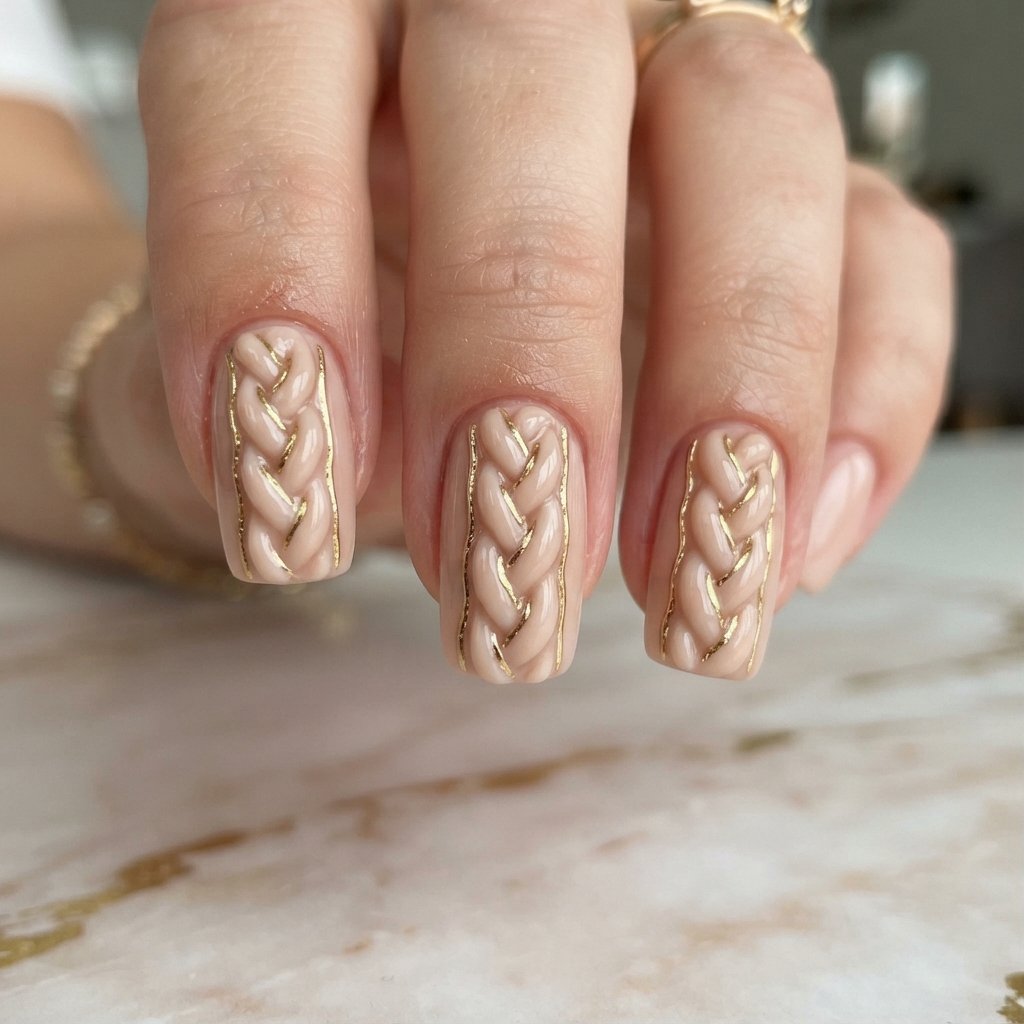
A step beyond standard cable knit, this braids three separate strands together rather than just two crossing lines. It reads as more elaborate and works especially well as a single statement nail rather than repeated across all ten.
Gold or bronze polish along the braid’s raised edges catches light in a way that makes the 3D effect read clearly even in photos.
Popcorn Stitch Nail Art
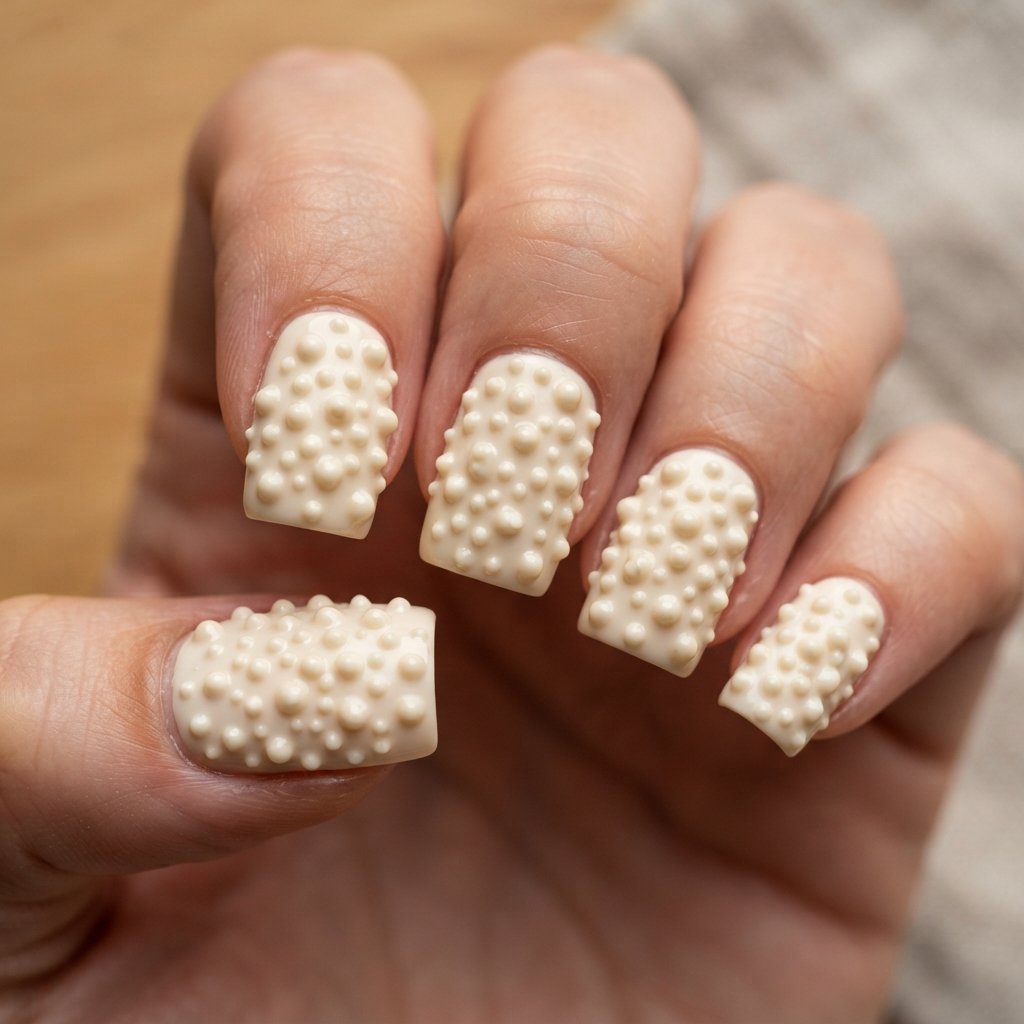
Popcorn stitches are those small, dense knitted bobbles that stick out from an otherwise flat sweater surface, and they’re recreated on nails using tiny dome-shaped dots of raised gel. Scattered irregularly rather than in a strict grid, they mimic the slightly imperfect placement of hand knitting.
This texture holds up surprisingly well over time, since the domes are small enough not to catch on clothing.
Seed Stitch Nail Art
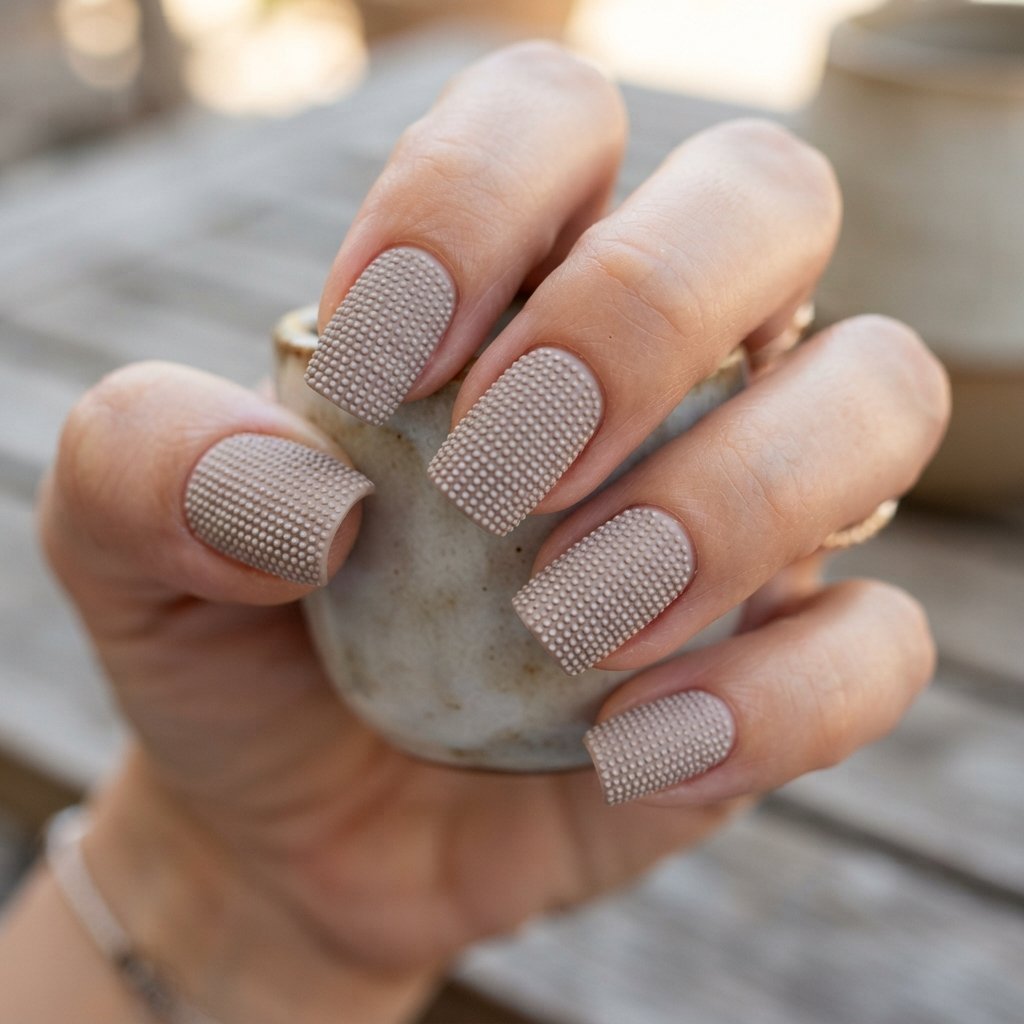
Seed stitch creates a subtle, evenly bumpy texture across an entire knitted surface — no big motifs, just consistent small texture throughout. On nails, this becomes a uniform stippled or dotted finish rather than a focal pattern.
It’s one of the more forgiving styles here if your hands aren’t perfectly steady, since the texture is meant to look slightly irregular anyway.
Moss Stitch Texture Nail Art
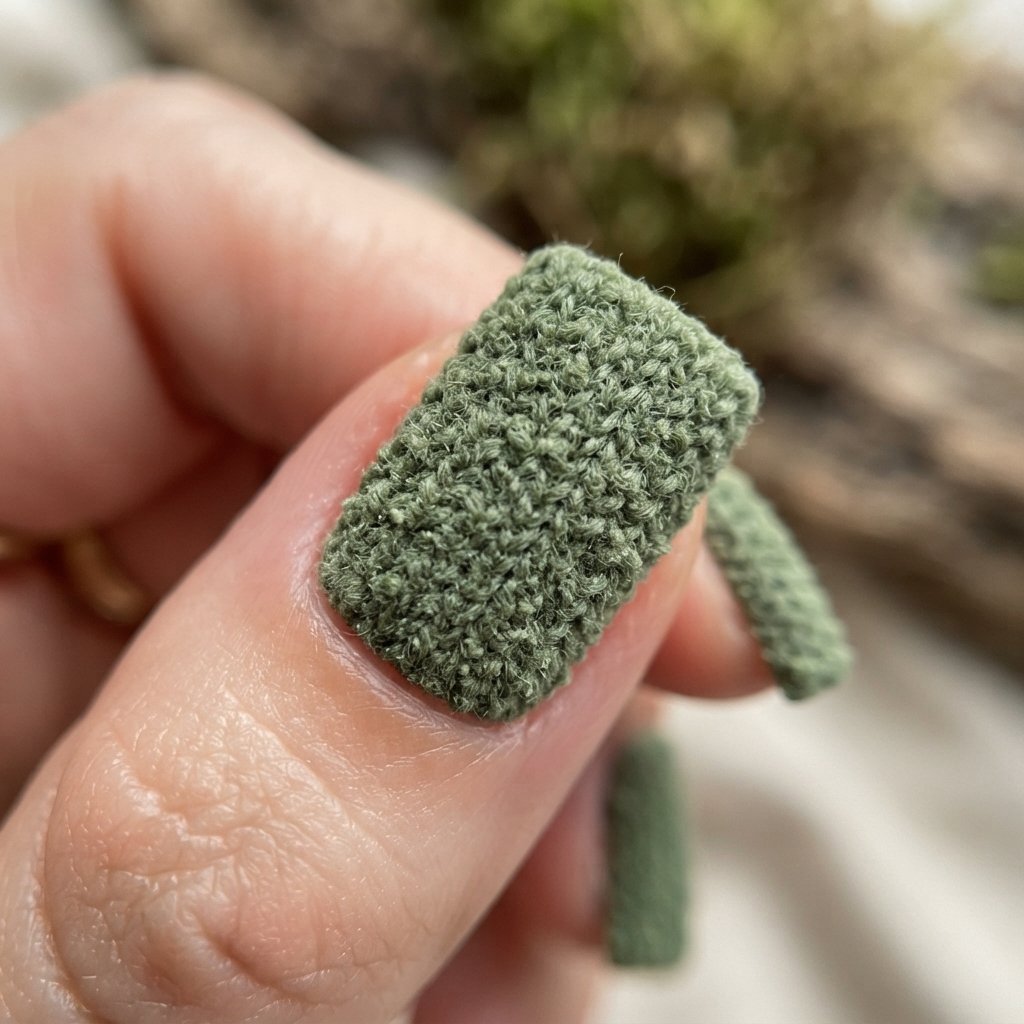
Closely related to seed stitch, moss stitch has a slightly denser, mossier texture that reads as almost furry from a distance. A fine texture gel or repeated small dabbing motion with polish recreates this without needing specialty tools.
Sage green and moss tones are the obvious color pairing, though a warm taupe works nearly as well.
Turtleneck Rib Nail Art
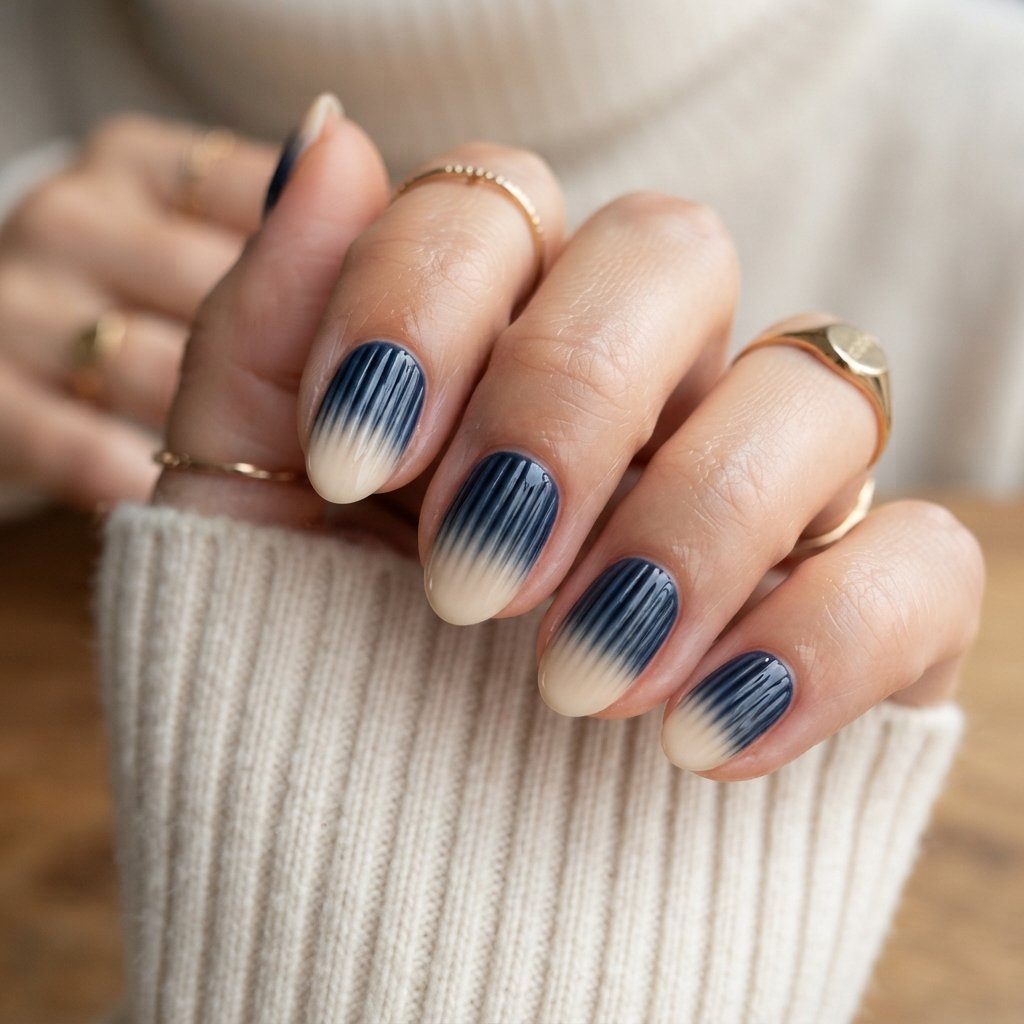
This borrows the tight, closely ribbed collar of a turtleneck rather than the sweater’s body, using very fine, tightly packed vertical lines concentrated near the cuticle and fading into a smooth solid color toward the tip.
The contrast between textured base and smooth tip gives this design more visual movement than a fully uniform pattern would.
Cowl Neck Wrap Nail Art
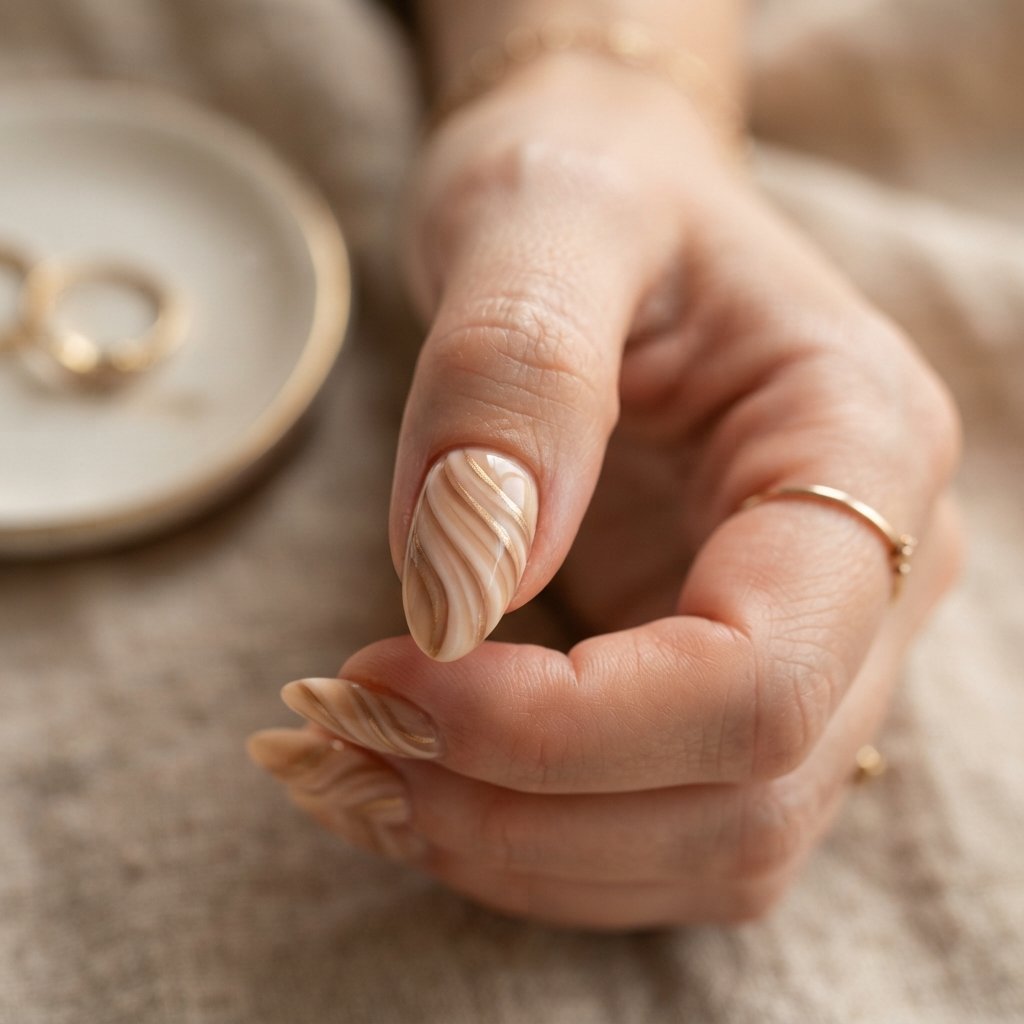
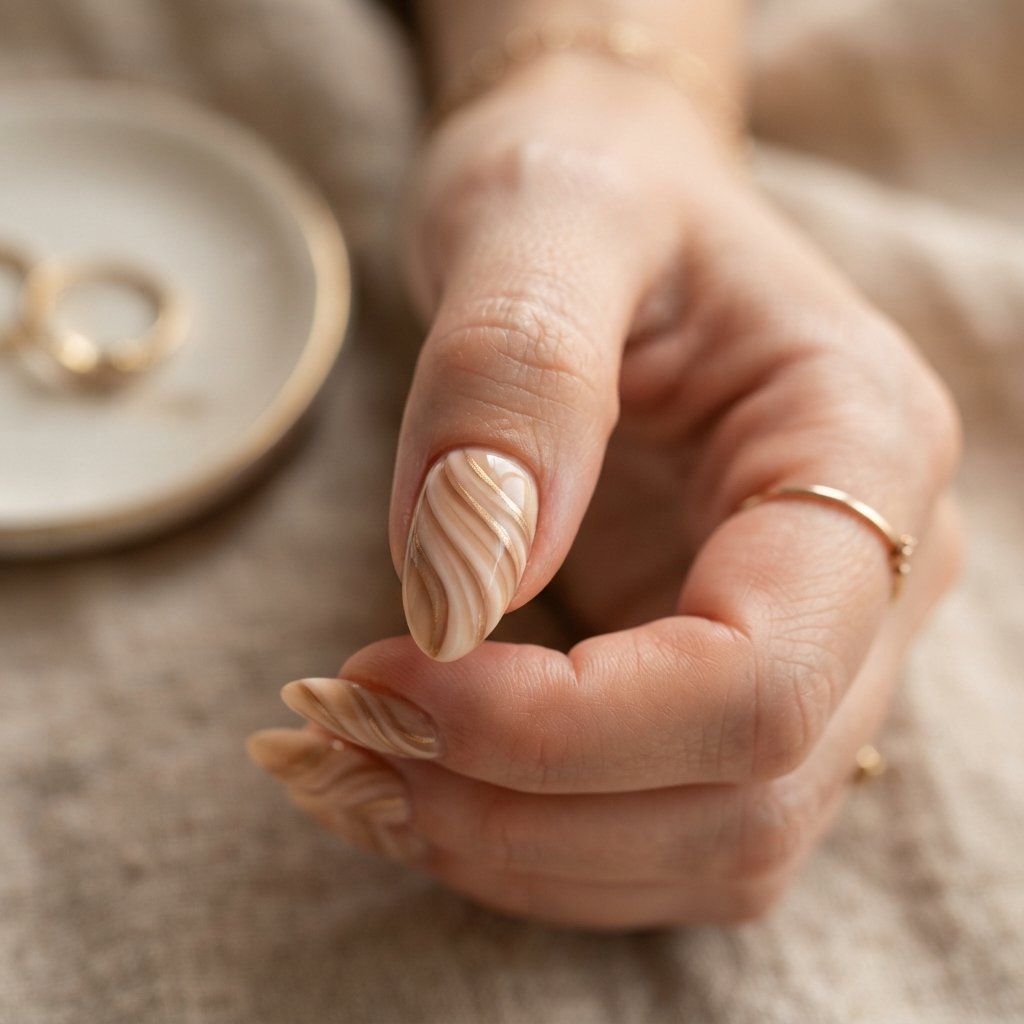
Cowl neck sweaters drape in loose folds rather than sitting flat, and this design translates that draping into soft, curved shading lines that wrap diagonally around the nail rather than running straight up and down.
It’s more about implied movement than precise pattern work, which makes it a good option for anyone newer to detailed nail art.
Tweed Knit Nail Art
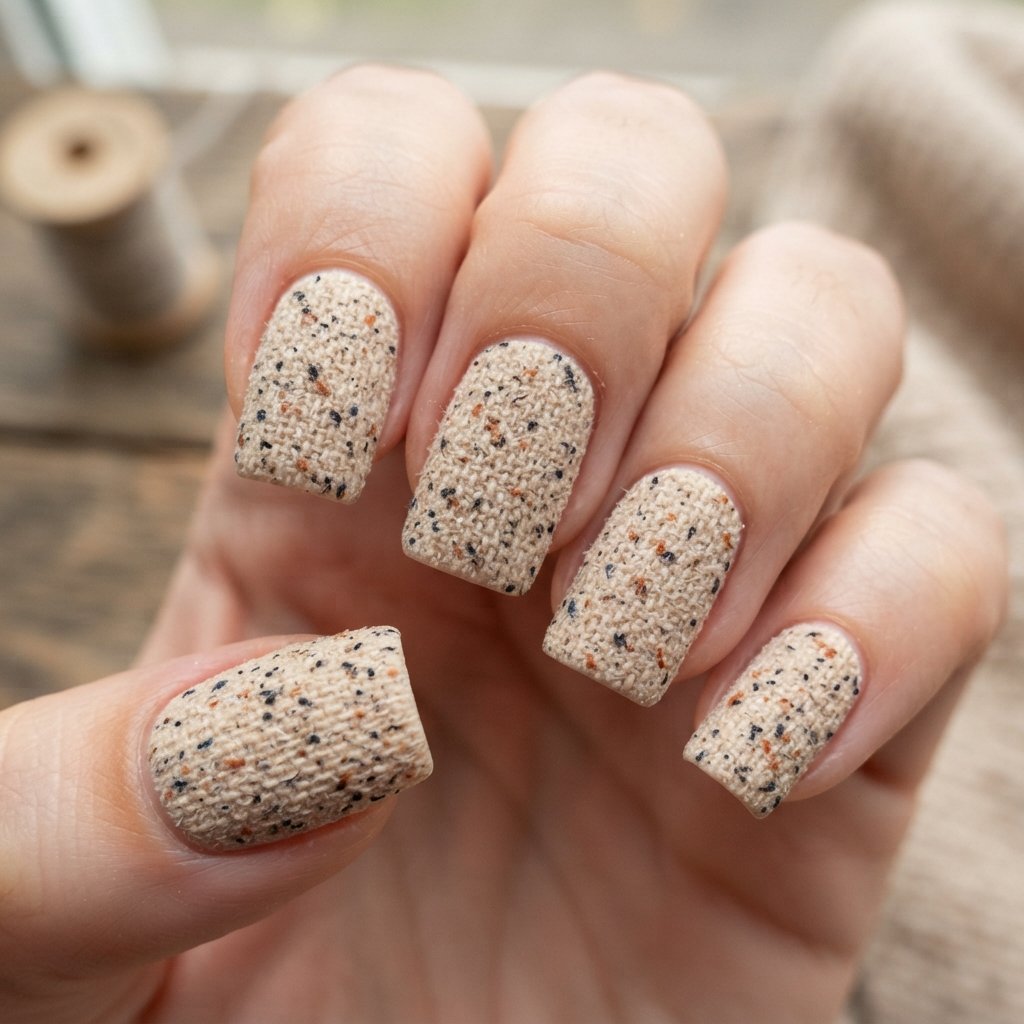
Tweed’s flecked, multicolor texture comes from tiny individual fibers rather than a repeating shape, so recreating it means speckling fine dots of two or three colors across a neutral base rather than drawing any clear motif.
This is one of the easiest styles on this list to do quickly, since precision matters far less than random, natural-looking distribution.
Alpine Sweater Nail Art
Alpine patterns combine geometric borders with small central motifs like stars or edelweiss flowers, usually in red and white against a cream background. It’s busier than most designs here, closer to a full scene than a texture.
Saving this level of detail for one accent nail, with the rest kept plain, stops the whole set from feeling overwhelming.
Shaker Stitch Nail Art
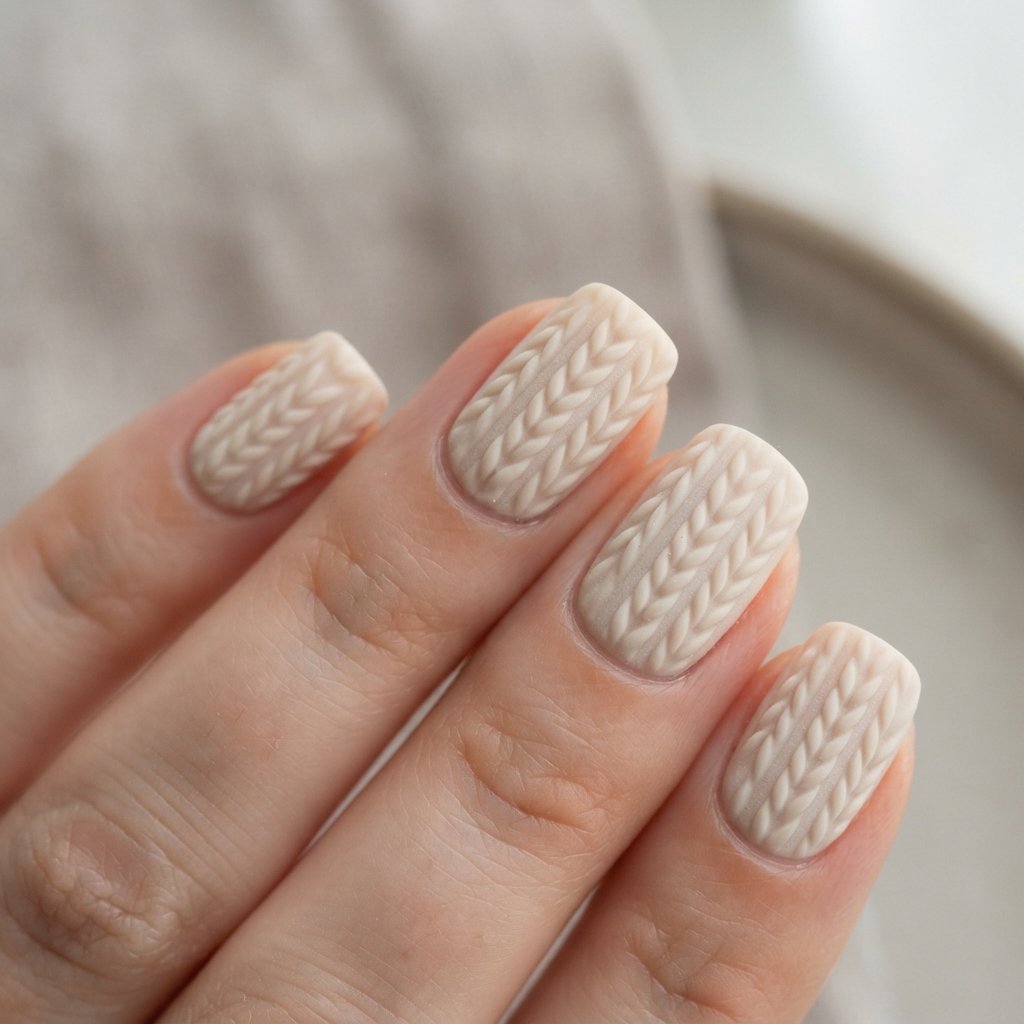
Shaker stitch produces a simple, evenly spaced ribbed texture that’s flatter than chunky ribbing but still clearly textured up close. It suits nails where you want the sweater reference to be subtle rather than the main event.
Pale neutrals work best here, since the texture itself is quiet enough not to need bold color to stand out.
Diamond Knit Nail Art
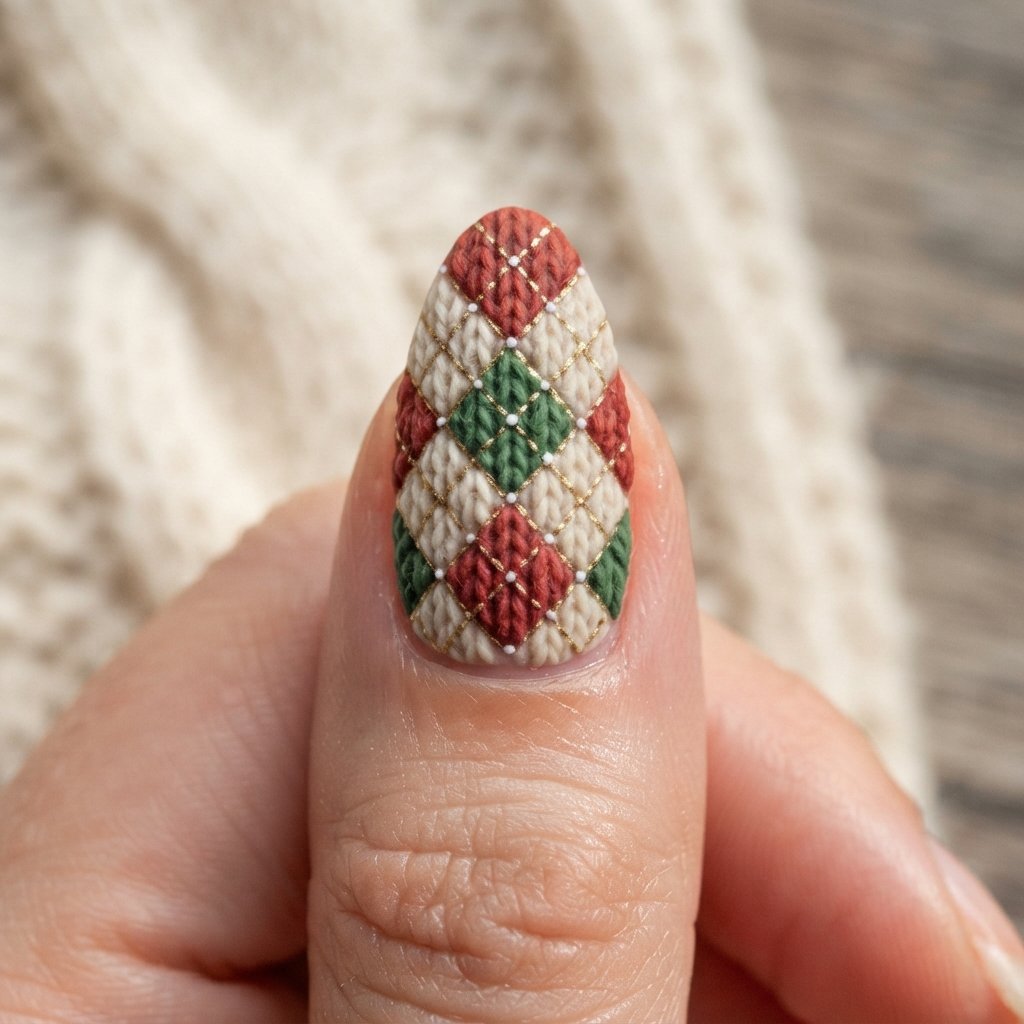
Diamond patterns knitted into argyle-style sweaters use repeating diamond shapes, sometimes layered with a small cross or dot inside each one. On nails, this usually means two or three diamonds stacked vertically rather than a full repeating grid, since nail surfaces are too small for the complete pattern to read clearly.
Muted red, cream, and forest green together keep this feeling classic rather than costume-like.
Honeycomb Knit Nail Art
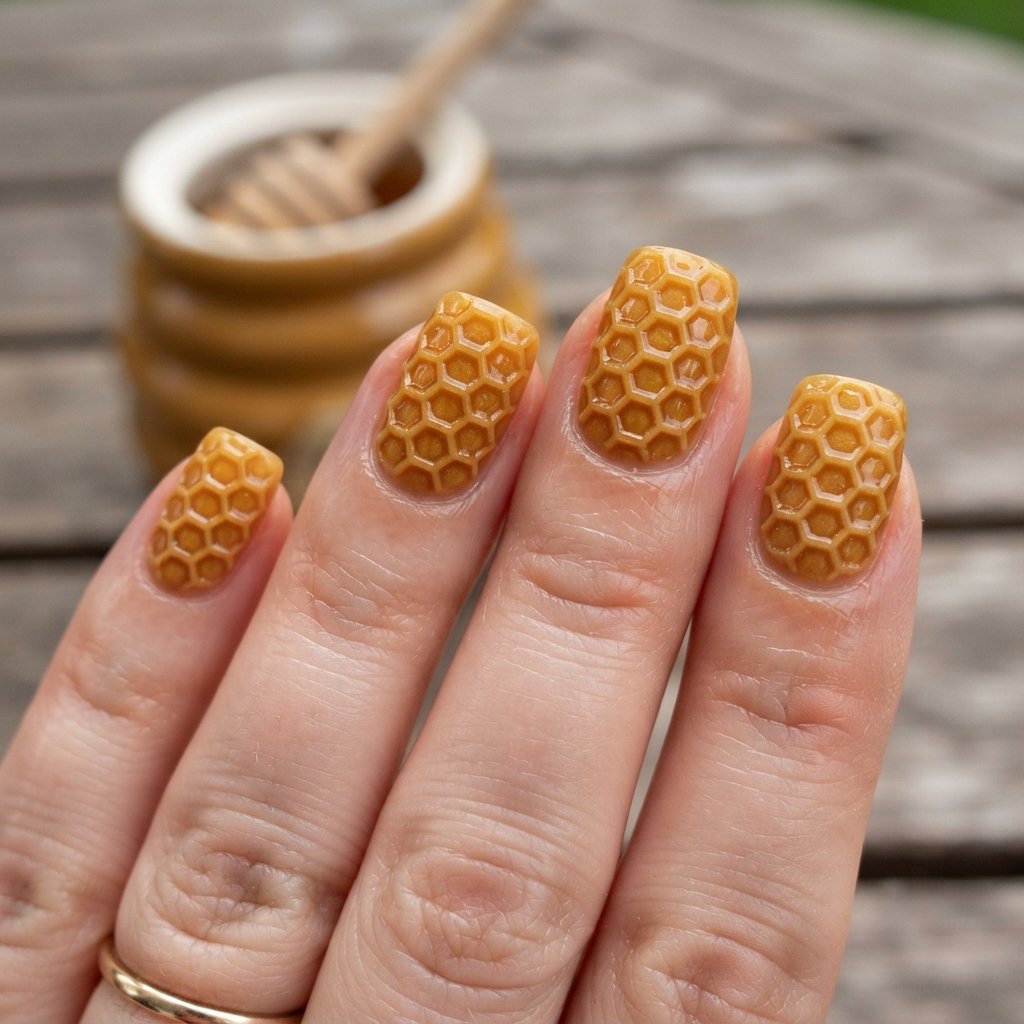
Honeycomb stitch creates a raised, hexagonal texture that genuinely resembles a beehive when you look closely. It’s one of the more technical patterns to paint by hand, so many nail techs achieve it instead using a textured stamping plate designed specifically for honeycomb effects.
Golden amber tones lean into the honey theme literally, though grey and white versions look just as sharp.
Chunky Cardigan Nail Art
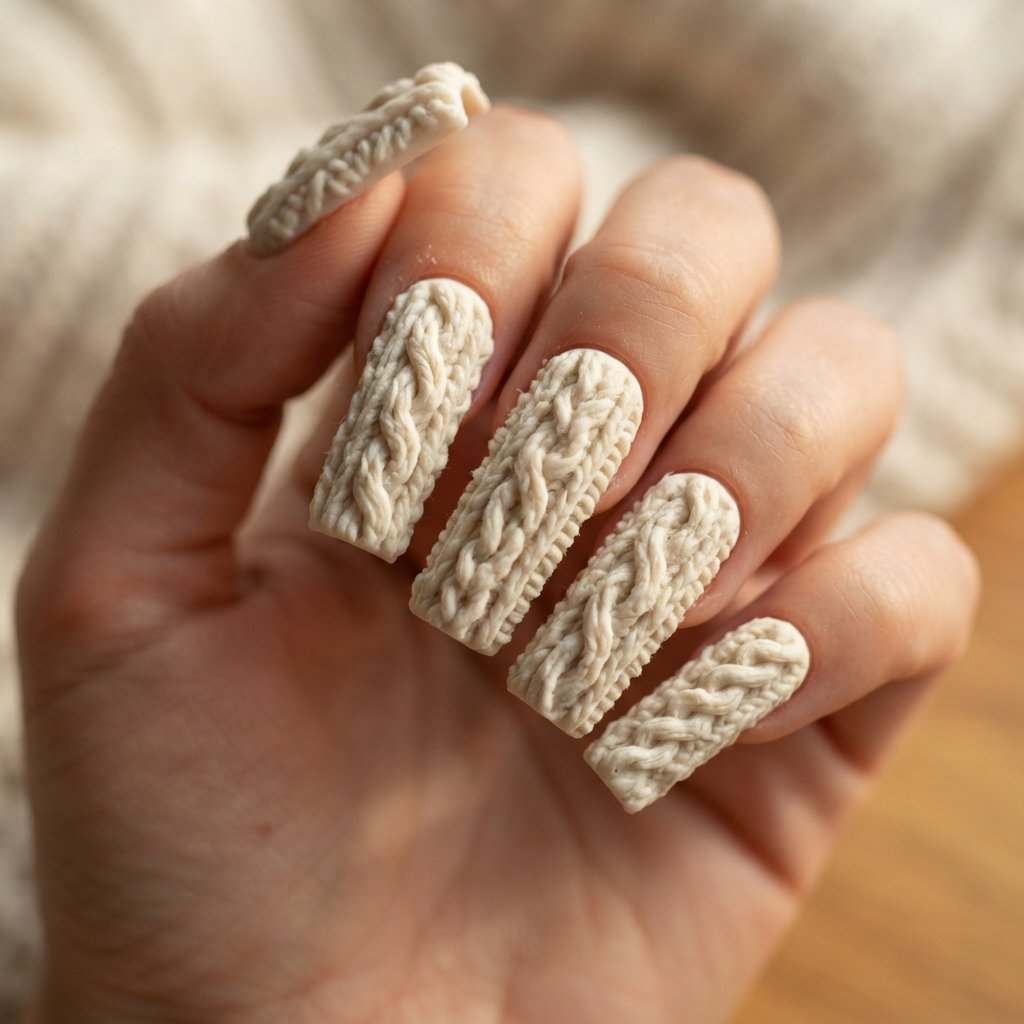
Cardigans knit looser and chunkier than fitted sweaters, and this design captures that looseness through wider, more exaggerated cable or rib patterns than you’d use for a fitted turtleneck reference. Everything is scaled up slightly.
This works particularly well on longer nail shapes, where there’s enough surface area for the bigger pattern scale to actually read as intentional.
Wool Blend Ombre Nail Art
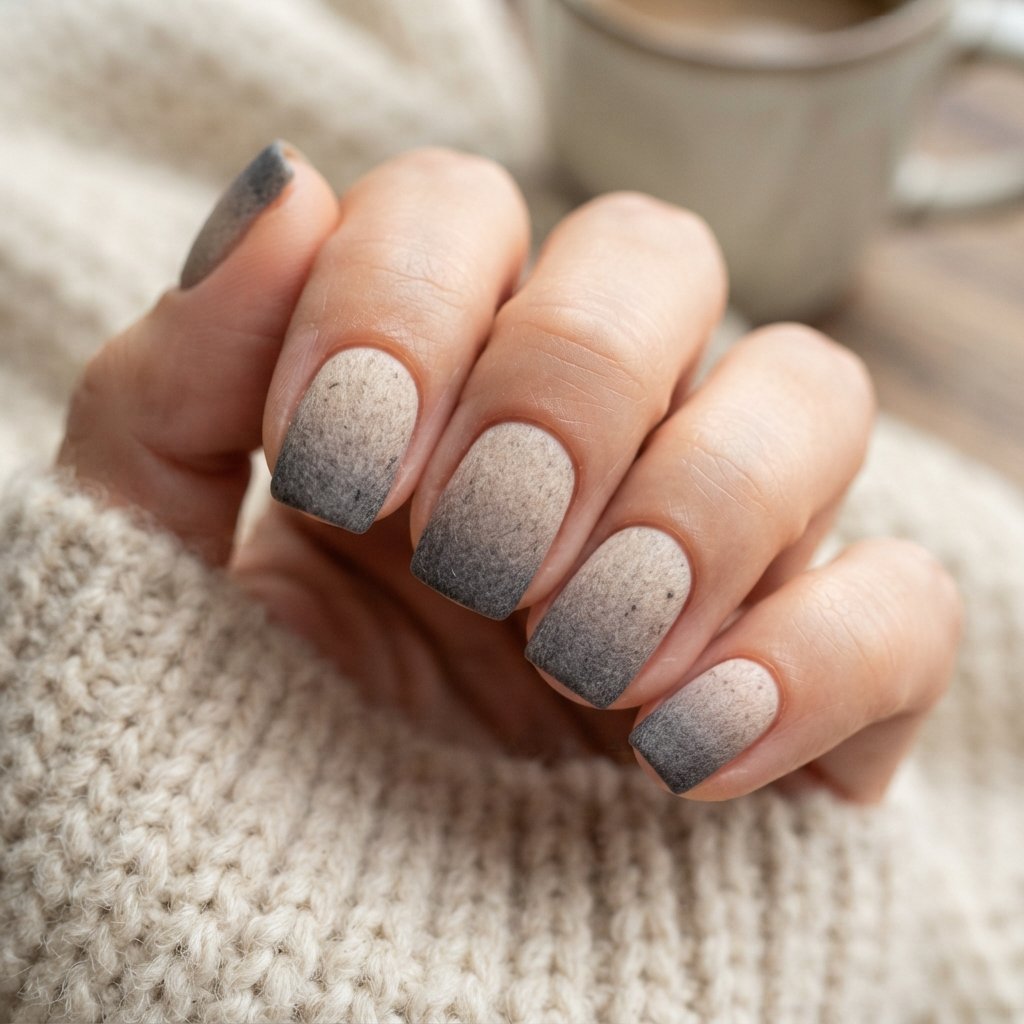
Rather than any specific stitch, this style blends two or three wool-inspired neutral shades into each other across the nail, mimicking how heathered wool yarn naturally shifts tone within a single strand.
A soft matte top coat finishes this off far better than glossy does — the sheen makes the ombre look like polish rather than fiber.
Nordic Reindeer Knit Nail Art
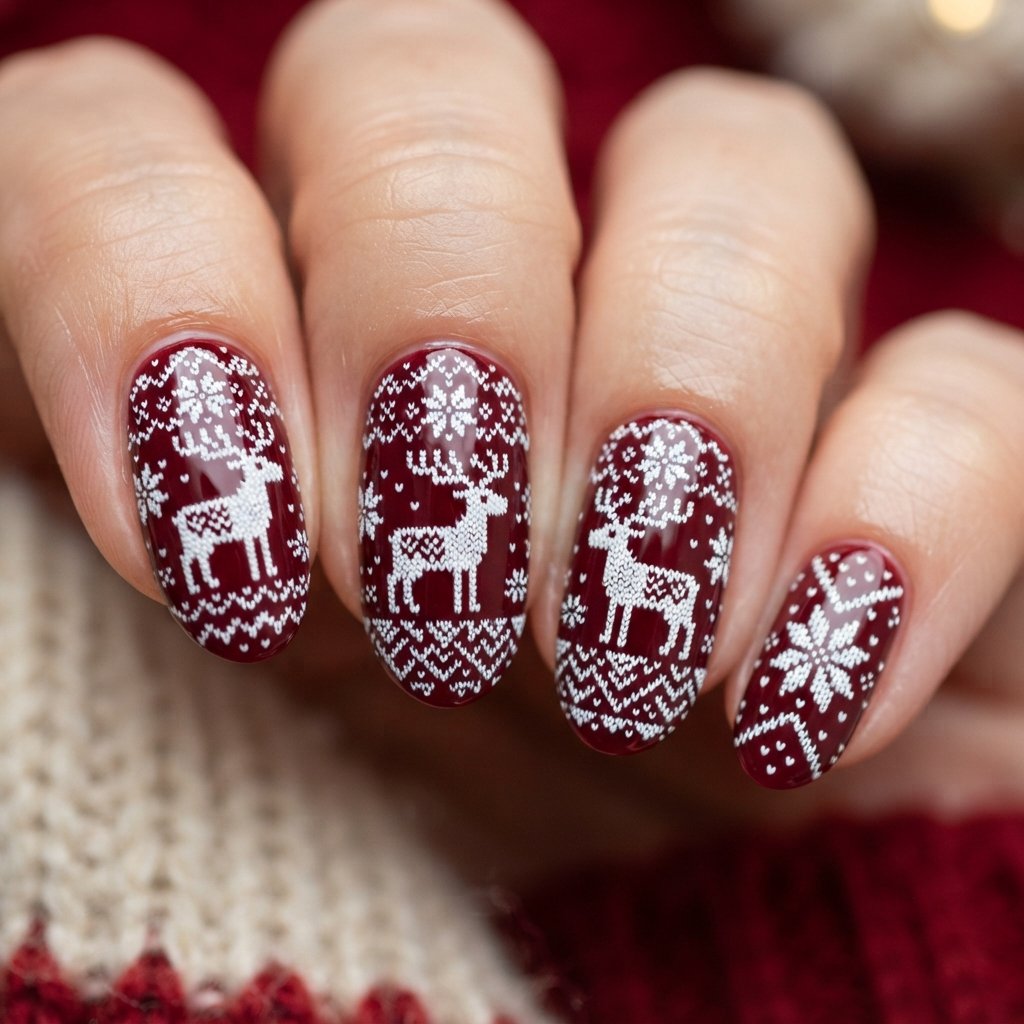
A more detailed cousin of the snowflake design, this paints a small reindeer silhouette — usually simplified to just a few clean lines — against a red or navy background, exactly the way reindeer motifs appear across classic holiday sweaters.
Because the silhouette needs some detail to actually look like a reindeer and not an abstract shape, this design works best on longer nails or done by someone experienced with fine linework.
Cross Stitch Sweater Nail Art
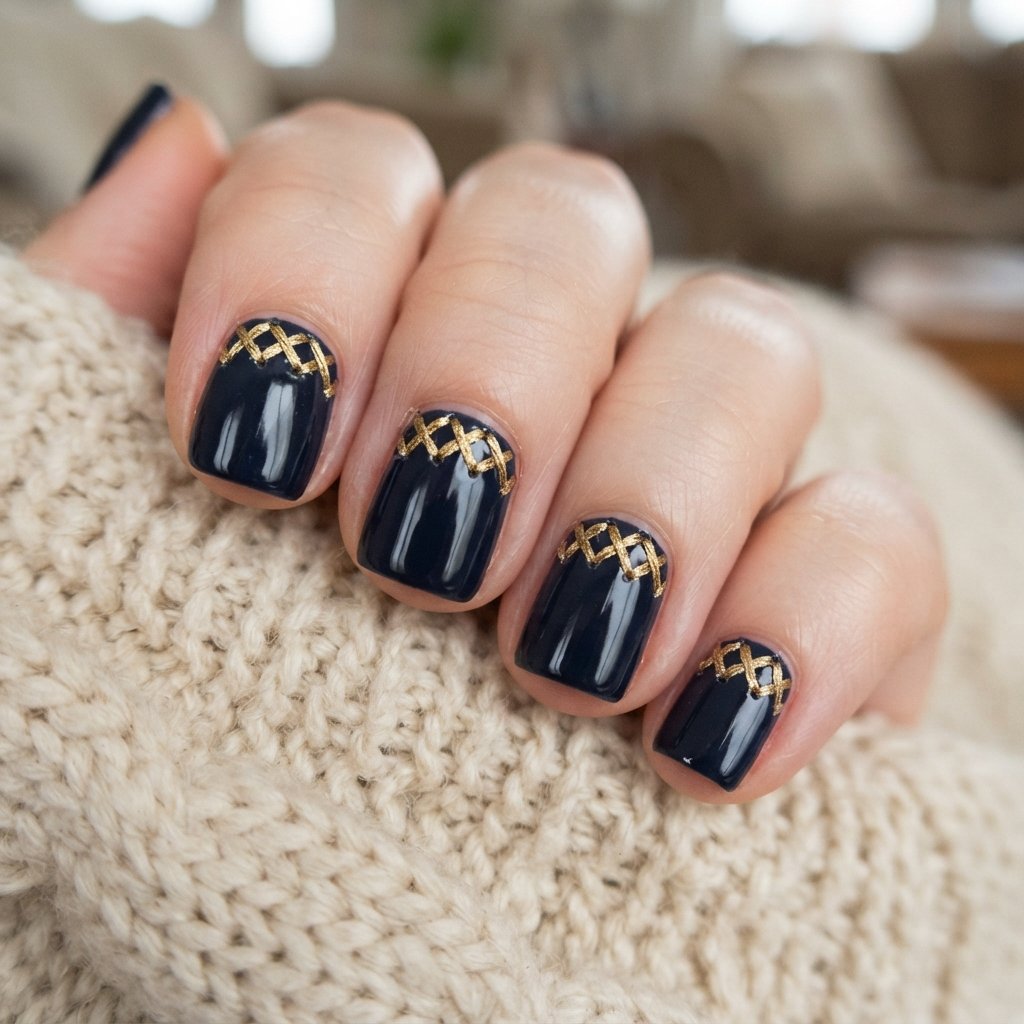
Cross stitch uses small repeating X shapes, traditionally embroidered rather than knitted, but common enough on sweater trim that it fits comfortably in this category. A row of tiny X marks near the cuticle in a contrasting color gives just enough detail without covering the whole nail.
Red X marks against white, or the reverse, is the most traditional pairing, though metallic gold X marks against a dark base look noticeably more modern.
Two Tone Cable Nail Art
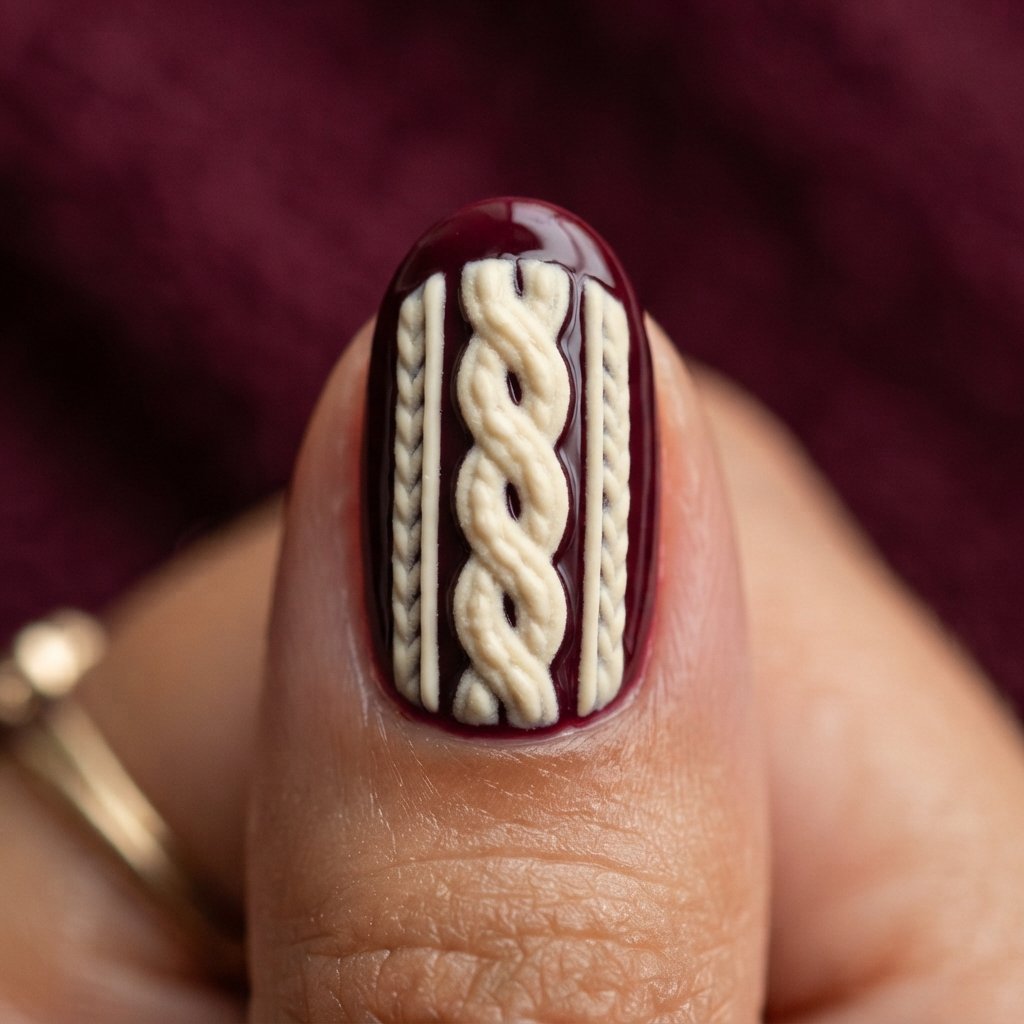
Standard cable knit uses one color throughout, but this variation paints the crossing cable strands in a different shade from the background, making the twist pattern read far more clearly than a single-tone version ever could.
Cream cables against a burgundy or forest green base give this the most striking contrast, especially in photos where subtle single-tone texture might not show up well.This one is the second last idea for sweater nails art.
Frosted Wool Nail Art
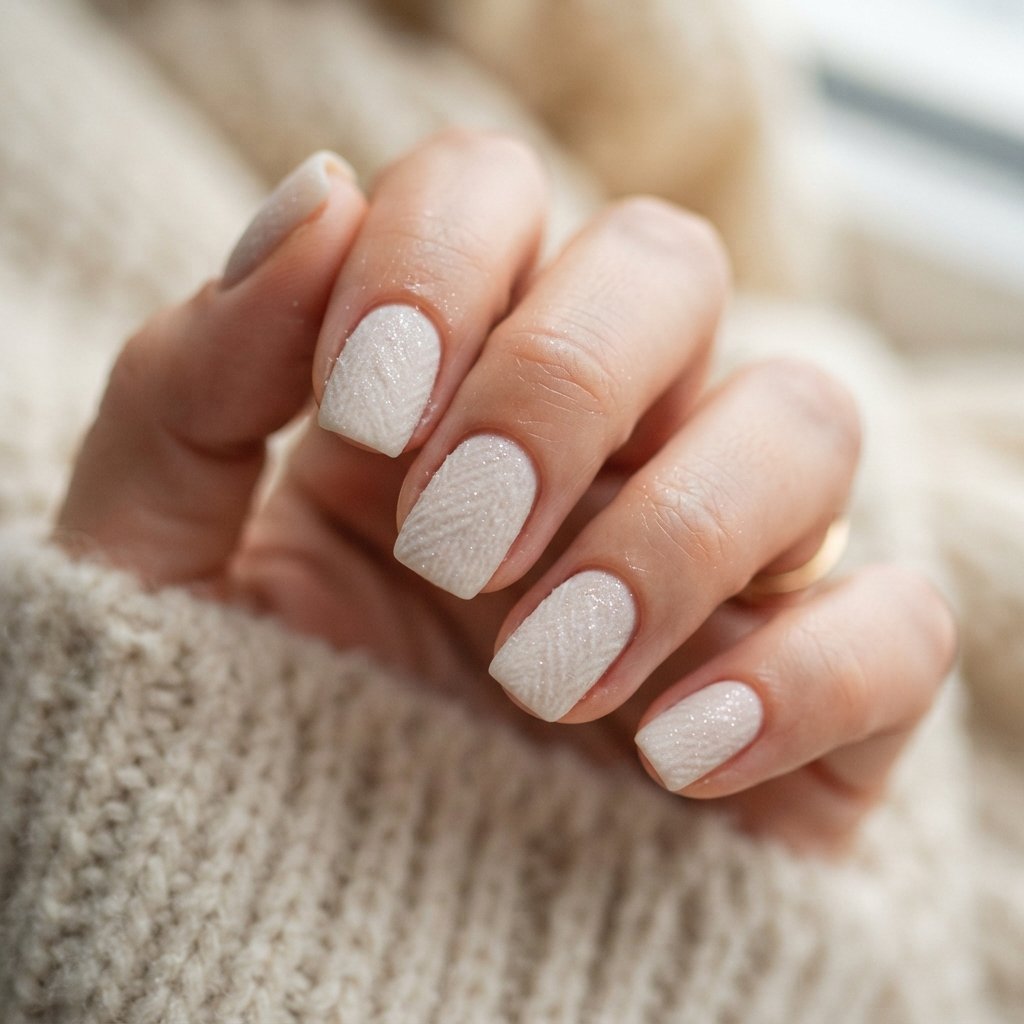
This closing style adds a fine, icy shimmer over a matte wool-toned base, like a sweater dusted lightly with frost. It’s less about pattern and more about finish, using a barely-there glitter top coat that only catches light at certain angles rather than sparkling constantly.
It rounds out this list of sweater nails art styles with something quieter — proof that the trend doesn’t always need a bold, obvious pattern to still feel intentional and seasonal.
FAQs About Sweater Nails Art
What is sweater nails art exactly?
It’s a nail design trend that recreates real knitting stitches, textures, and patterns — like cable knit, ribbing, or Fair Isle motifs — directly onto the nail surface using gel, acrylic, or fine hand-painted detail.
Do I need 3D textured gel for sweater nails art, or can flat polish work?
Flat polish can recreate the visual pattern of most designs through shading and linework alone, but a few styles, like popcorn stitch or chenille texture, genuinely need raised gel or flocking powder to feel authentic.
Which sweater nails art style is easiest for beginners?
Tweed knit and Nordic snowflake designs are the most forgiving, since both rely on loose, slightly imperfect placement rather than precise, symmetrical linework.
How long does a detailed sweater nails art design usually last?
With proper gel application and a strong top coat, most textured designs hold up for two to three weeks before the pattern starts to lose definition from daily wear.
Can sweater nails art be done on short nails?
Yes, though simpler patterns like ribbing, seed stitch, or a single Fair Isle band work better on shorter nails than heavily detailed designs like Aran cable or reindeer silhouettes, which need more surface area to read clearly.
Conclusion
What makes sweater nails art worth the extra effort is that it borrows from something real — actual knitting techniques that have existed for generations — rather than inventing a pattern purely for decoration. That grounding is why it feels less like a passing trend and more like a genuine crossover between two crafts.
Pick a style based on the sweater you actually reach for most, whether that’s a chunky cable knit cardigan or a simple ribbed turtleneck, and let your nails echo that same texture. The best version of sweater nails art is always the one that feels like it belongs to your own wardrobe, not just a design copied off someone else’s hands.